Football has produced thousands of brilliant players, but only a handful have crossed the line from great to iconic. An icon is more than a statistics sheet. It is a moment frozen in memory, a style copied in playgrounds from Buenos Aires to Panipat, a name that makes fans of rival clubs nod in respect. Ranking such players is always an argument rather than a science, and every list leaves out someone beloved. Still, the ten names below have shaped the sport through talent, trophies and sheer cultural weight. They are presented in rough order of historical influence, though you are welcome to disagree.
1. Pelé: The King

No conversation about football icons can begin anywhere else. Edson Arantes do Nascimento burst onto the world stage at the 1958 World Cup as a 17-year-old, scoring in the semi-final and twice in the final as Brazil lifted its first title. He would go on to win the tournament in 1962 and 1970, making him the only player to collect three World Cup winners’ medals. The 1970 side, with its yellow shirts and fluid attacking play, is still widely called the finest team ever assembled.
Pelé’s career with Santos and Brazil produced goals in staggering numbers, and his total of 77 for the national team stood for decades. More importantly, he made football a global spectacle. His life and career are well documented in his Wikipedia biography, and his death in December 2022 prompted tributes from every corner of the sporting world.
2. Diego Maradona: The Rebel Genius

If Pelé was football’s king, Diego Maradona was its poet and its outlaw. Small, low-slung and almost impossible to dispossess, he dragged ordinary teams to extraordinary heights. At the 1986 World Cup he effectively won the tournament for Argentina single-handedly. Against England he scored twice in four minutes: first the infamous “Hand of God”, then a slaloming solo run that was later voted the Goal of the Century.
At club level, he transformed Napoli from also-rans into champions, delivering two Serie A titles and a UEFA Cup. The city still treats him as a saint. His life was turbulent, marked by addiction and controversy, which only deepened the legend. You can read more in his career overview. He died in November 2020, and Argentina mourned for days.
Read more: Footballers Who Divide Fans: Why 5 Stars Split Their Own Supporters
3. Lionel Messi: The Magician Who Finally Completed the Story

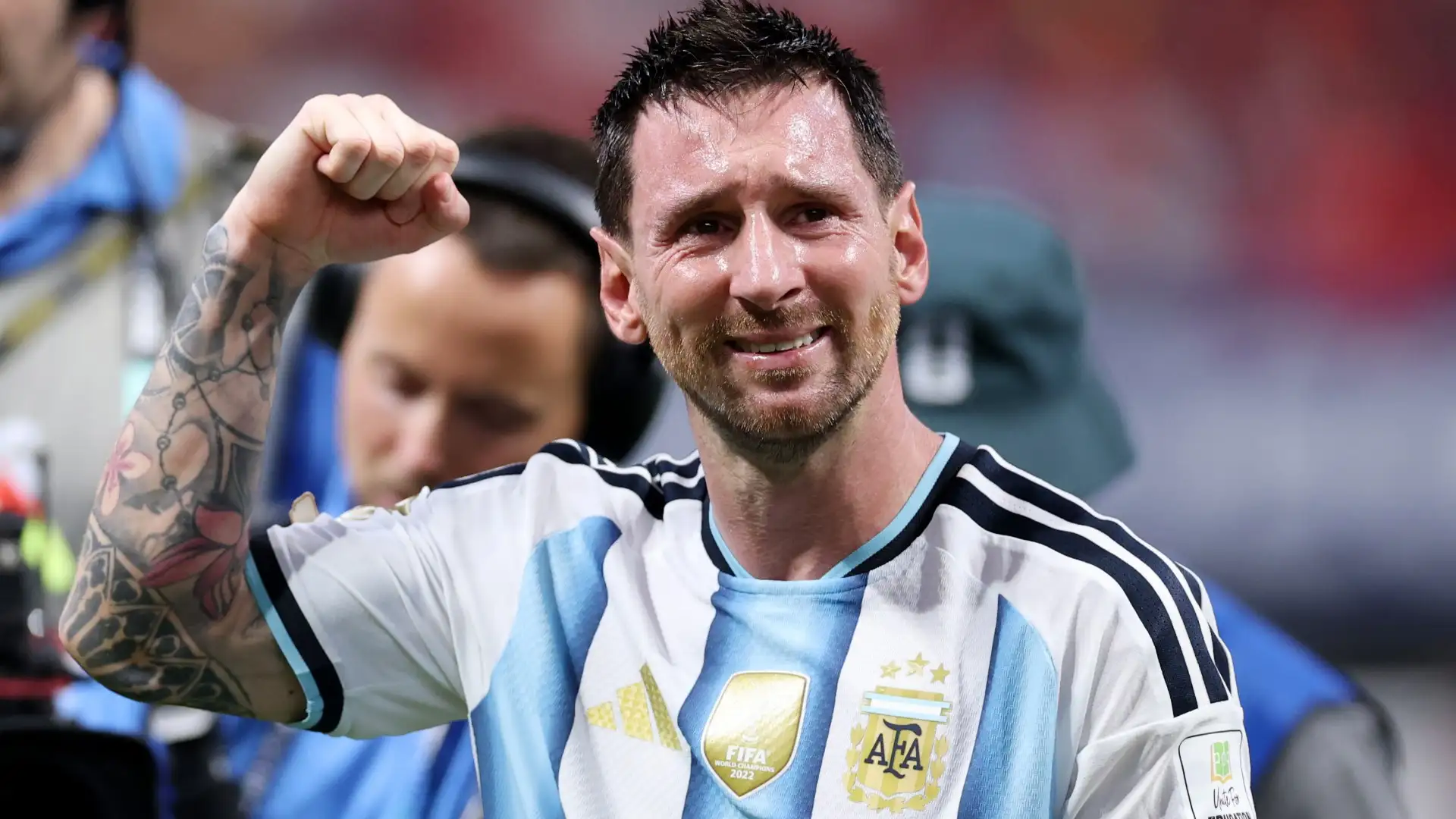
For almost two decades Lionel Messi made the impossible look routine. At Barcelona he won ten La Liga titles and four Champions League trophies, and his record of eight Ballon d’Or awards is unmatched. His dribbling, balance and vision seemed to bend the laws of physics, and the numbers he produced in a single season often looked like typos.
The only gap in his résumé was a World Cup, and many fans doubted it would ever be filled. Then came Qatar in 2022, where he led Argentina to victory in one of the greatest finals ever played. He had already won the Copa América in 2021, and he later added another continental title with Argentina. His move to Inter Miami in 2023 introduced football to a vast new audience in North America. Follow his full story on his profile page.
4. Johan Cruyff: The Thinker Who Rewired the Game

Some icons are remembered for what they won. Johan Cruyff is remembered for what he taught. As the star of the Ajax side that won three straight European Cups from 1971 to 1973, and as the leader of the Netherlands team that dazzled at the 1974 World Cup, he embodied “Total Football”, a system in which every player could swap roles seamlessly.
Cruyff won three Ballon d’Or awards and gave the world the famous “Cruyff turn”, a trick still taught to children today. His influence did not stop when he retired. As a manager at Barcelona, he built the foundations of the possession-based philosophy later perfected by Pep Guardiola and others. Few players have shaped football as a way of thinking so profoundly. He died in 2016, but his ideas remain the operating system of modern attacking football.
Read more: Lionel Messi Retirement: Argentina Legend Ends International Career
5. Cristiano Ronaldo: The Machine Built on Ambition

Where Messi seemed gifted by nature, Cristiano Ronaldo was sculpted by obsession. Rising from Madeira to Sporting Lisbon and then Manchester United, he turned himself from a showy winger into one of the most lethal finishers ever seen. At Real Madrid he scored more than 450 goals in under a decade and won four Champions League titles, including three in a row between 2016 and 2018.
He has won five Ballon d’Or awards and leads the all-time list for international goals. With Portugal he lifted Euro 2016 in France, a triumph that quieted critics who said he could not deliver for his country. Beyond the pitch, he is among the most followed people on social media, proof of how football icons now operate as global brands. His longevity, still impressive well into his forties, is arguably his greatest achievement.
6. Franz Beckenbauer: Der Kaiser

Franz Beckenbauer reinvented the defender. Rather than simply stopping attacks, he started them, strolling out of the back with the elegance of a midfielder and inventing the modern libero role. Nicknamed “Der Kaiser” for his regal bearing, he captained West Germany to the 1974 World Cup and the 1972 European Championship, while leading Bayern Munich to three consecutive European Cups from 1974 to 1976.
He won two Ballon d’Or awards, an extraordinary feat for a defender. In 1990 he added a World Cup as head coach, joining a tiny group who have lifted the trophy as both player and manager. His calm authority and technical grace set a template that defenders such as Franco Baresi, Paolo Maldini and later Virgil van Dijk would follow. He passed away in January 2024.
Read more: 10 Cricketers Who Represented Their Country in Other Sports
7. Zinedine Zidane: Elegance in Motion

Zinedine Zidane played football as though the pitch were a stage. His first touch seemed to absorb the ball and the pressure of the moment at the same time. In the 1998 World Cup final he scored twice with his head against Brazil, giving France its first title and earning the Ballon d’Or that year. Two years later he led Les Bleus to Euro 2000.
His career at Juventus and Real Madrid produced one of the most breathtaking goals in Champions League final history, a left-footed volley against Bayer Leverkusen in 2002. Even his controversial headbutt in the 2006 World Cup final became part of an unforgettable story. Later, as Real Madrid manager, he won three Champions League trophies in a row, an achievement no coach had managed in the modern era.
8. Ronaldo Nazário: The Phenomenon

At his peak, Ronaldo Nazário was the most frightening striker anyone had seen. A blend of explosive pace, power and dazzling footwork, he won the Ballon d’Or at just 21 after a stunning season with Barcelona. Fans called him “O Fenômeno”, and defenders understood why.
His story is also one of resilience. Devastating knee injuries threatened to end his career before he was 25, and he endured a strange and troubled World Cup final in 1998. Yet he returned in triumph at the 2002 World Cup, scoring eight goals and both in the final as Brazil claimed its fifth title. He added a second Ballon d’Or in 2002 and later starred for Real Madrid and both Milan clubs. Many fans still wonder what he might have achieved with a healthy body.
Read more: Game4Hope at Goodison Park: Everton and Liverpool Legends Return for Charity Match
9. Lev Yashin: The Black Spider

Goalkeepers rarely become icons, which makes Lev Yashin unique. Dressed in all black, the Soviet keeper dominated his area with athleticism and an uncanny sense of anticipation. He helped the USSR win the first European Championship in 1960 and is credited with saving well over 100 penalties across his career, a remarkable figure given how rarely keepers stop spot-kicks.
In 1963 he became the only goalkeeper ever to win the Ballon d’Or, a distinction that still stands. He also helped redefine the position, commanding his defence vocally and starting attacks with quick throws. Today the award given to the world’s best goalkeeper carries his name, a fitting tribute to a man who proved that the last line of defence could also be the first line of inspiration.
10. Alfredo Di Stéfano: The Complete Footballer

Before the modern superstar existed, there was Alfredo Di Stéfano. Born in Argentina, he became the engine of the Real Madrid team that won the first five European Cups, from 1956 to 1960. He scored in every one of those finals, a record that tells you everything about his reliability under pressure.
What made him special was versatility. Di Stéfano defended, created and scored with equal ease, often appearing in every area of the pitch in a single move. He won two Ballon d’Or awards, and his partnership with Ferenc Puskás gave Madrid a golden age that shaped the club’s identity. Historians often call him the first truly complete player, and you can explore the sport’s wider evolution through the FIFA World Cup history page, which provides context for the tournaments where many of these legends made their mark.
What Makes a Football Icon?
Look across these ten careers and a few common threads appear. First, each player produced defining moments on the biggest stage, whether it was Pelé’s teenage World Cup, Maradona’s solo goal in Mexico or Zidane’s headers in Paris. Second, each changed how the game was played or understood. Cruyff and Beckenbauer rewrote tactical thinking, Yashin redefined goalkeeping, and Di Stéfano blurred the line between positions.
Third, these players carried meaning beyond results. Maradona gave his people pride, Pelé gave a developing nation global recognition, and Messi and Ronaldo gave the social media era its first truly worldwide rivalry. Their stories are tied to national identity, politics, class and joy.
Finally, icons endure. Football will keep producing stars, and young talents will rise and challenge records. Yet the figures on this list set standards against which every newcomer is measured. Whether your favourite is the elegant Zidane, the relentless Ronaldo or the quiet genius of Cruyff, the beauty of the game lies in the fact that no single ranking can end the debate. That is exactly why we keep talking about them.
FAQ
Who is the greatest footballer of all time?
There is no single answer. Pelé, Maradona and Messi are the three names most often put forward, and the choice usually depends on what a fan values most: Pelé’s three World Cups, Maradona’s ability to carry a team alone, or Messi’s sustained brilliance and record eight Ballon d’Or awards.
Why isn’t a player like Ferenc Puskás or George Best on the list?
Any top-ten list forces painful omissions. Puskás, Best, Paolo Maldini, Michel Platini and many others have strong claims. This list favours players whose influence reached beyond their own team, through trophies, tactics or cultural impact.
Who has won the most Ballon d’Or awards?
Lionel Messi holds the record with eight. Cristiano Ronaldo has five, while Johan Cruyff, Michel Platini and Marco van Basten each won three.
Has a goalkeeper ever won the Ballon d’Or?
Yes, but only once. Lev Yashin of the Soviet Union won it in 1963, and no goalkeeper has repeated the feat since.
Which players have won the World Cup as both player and coach?
Franz Beckenbauer is the best-known example, winning as West Germany’s captain in 1974 and as head coach in 1990. Brazil’s Zagallo achieved the same double.
Is it fair to compare players from different eras?
Comparisons across eras are always imperfect. Pitches, tactics, fitness science, media coverage and the number of matches played have all changed. A better approach is to ask how dominant each player was compared with their own contemporaries, and how much they changed the game.