The digestive system is one of the most fascinating systems in the human body. It takes the food we eat, breaks it down into nutrients, and helps our body use those nutrients for energy, growth, and repair.
That makes the digestive system a great topic for a school science project. Instead of simply drawing a diagram, you can build a model, perform a simple experiment, create an interactive game, or even turn digestion into a fun story.
Whether you need a quick classroom project or something impressive for a science fair, these 20 digestive system project ideas for students can help you get started.
Working Digestive System Models
These projects are great if you enjoy building things and want to demonstrate how food moves through the digestive system.
1. The Stocking Stomach Model
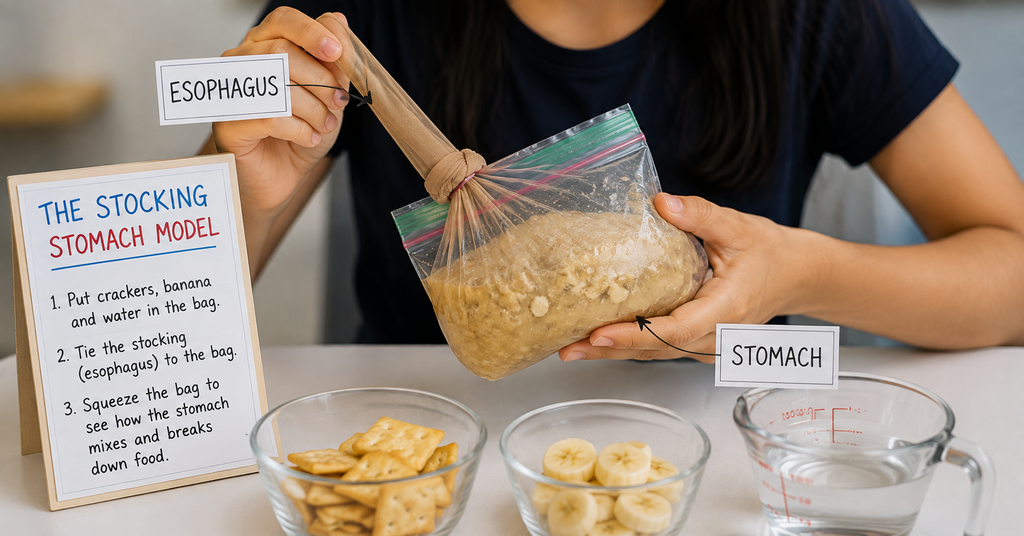
Use an old clean stocking or pair of tights to represent part of the digestive tract and a resealable plastic bag as the stomach. Add soft foods such as crackers and banana with a small amount of water, then gently squeeze the bag to demonstrate how the stomach mixes and breaks down food.
What it demonstrates: Mechanical digestion and stomach movement.
2. Digestive System in a Bottle
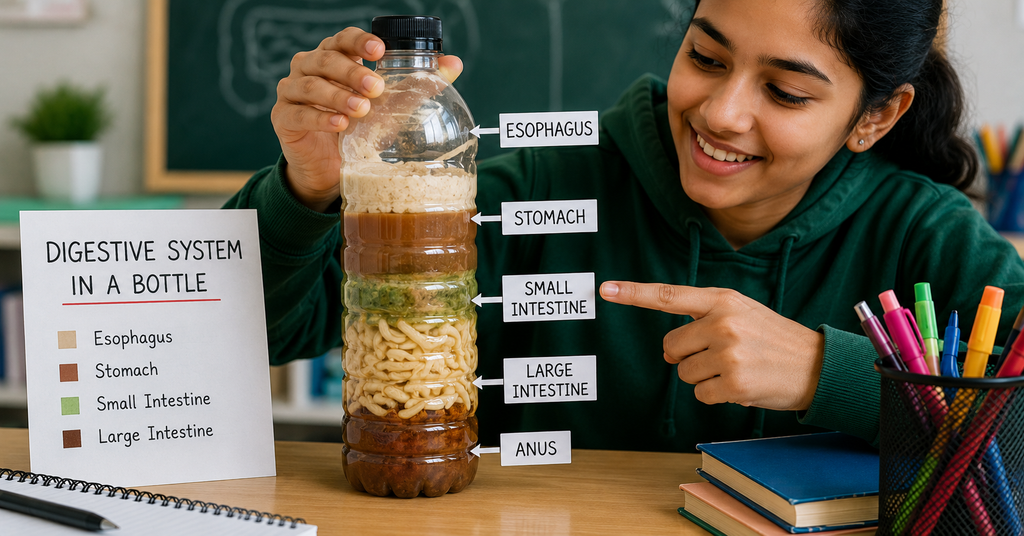
Create a simple working model using a funnel for the mouth, flexible tubing for the esophagus, a zip-lock bag for the stomach, and tubing or a straw to represent the intestines.
Move a small amount of soft food through the model to show the general path food takes through the digestive tract.
What it demonstrates: The movement of food from the mouth through the digestive system.
3. Stomach Acid Demonstration

Use vinegar or lemon juice as a simple model of an acidic environment. Place suitable food samples or an antacid tablet into the liquid and observe what happens.
Explain that the experiment simulates some properties of an acidic environment and does not exactly reproduce the conditions inside a human stomach.
Don’t actually use hydrochloric acid,Use vinegar or lemon juice
What it demonstrates: How acidic conditions can affect substances and why stomach acid is important in digestion.
4. 3D Clay Digestive System
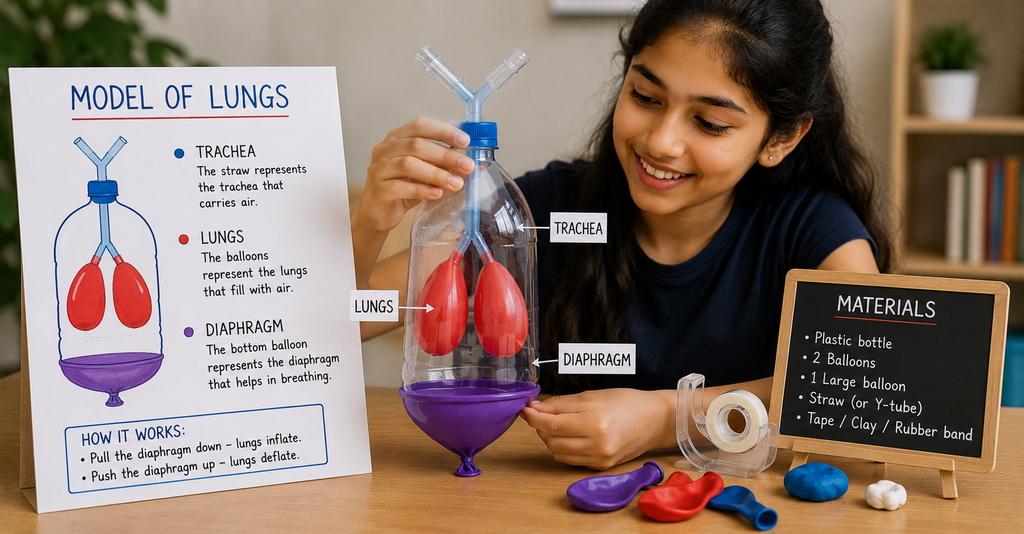
Use modeling clay or Play-Doh to create the major organs of the digestive system. Make each organ a different color and place the model on a large sheet of cardboard.
Label the:
- Mouth
- Esophagus
- Stomach
- Small intestine
- Large intestine
- Rectum
- Anus
- Liver
- Gallbladder
- Pancreas
What it demonstrates: The structure and organization of the digestive system.
5. Cardboard Tube Digestive System
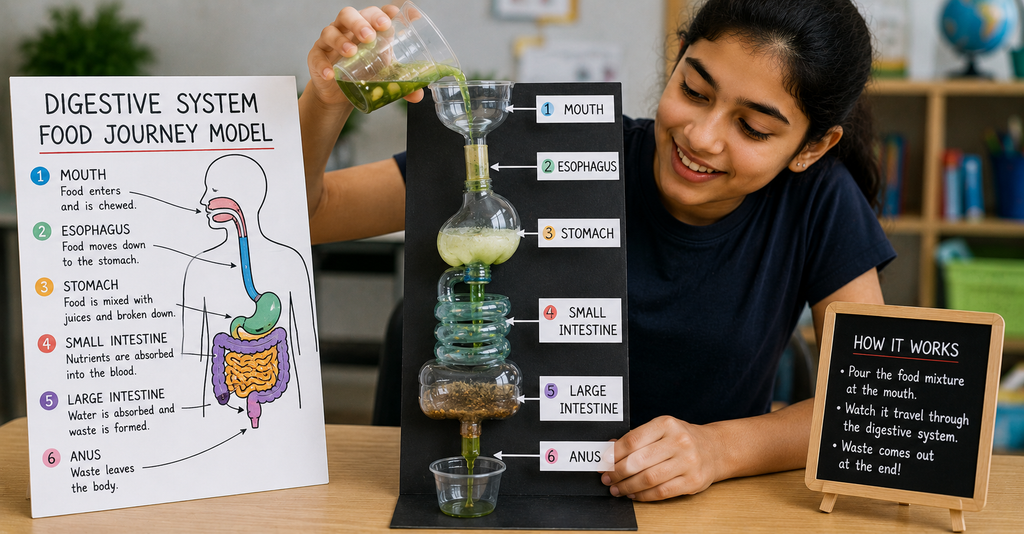
Collect cardboard tubes, paper bags, cardboard, and craft materials to build a large digestive system model.
Connect the sections in the correct order and use labels or arrows to show the direction food travels.
What it demonstrates: The overall pathway of food through the digestive tract.
Simple Experiments About Digestion
If you want your project to feel more like a science experiment, these ideas allow you to observe and explain different parts of digestion.
6. How Saliva Starts Digestion
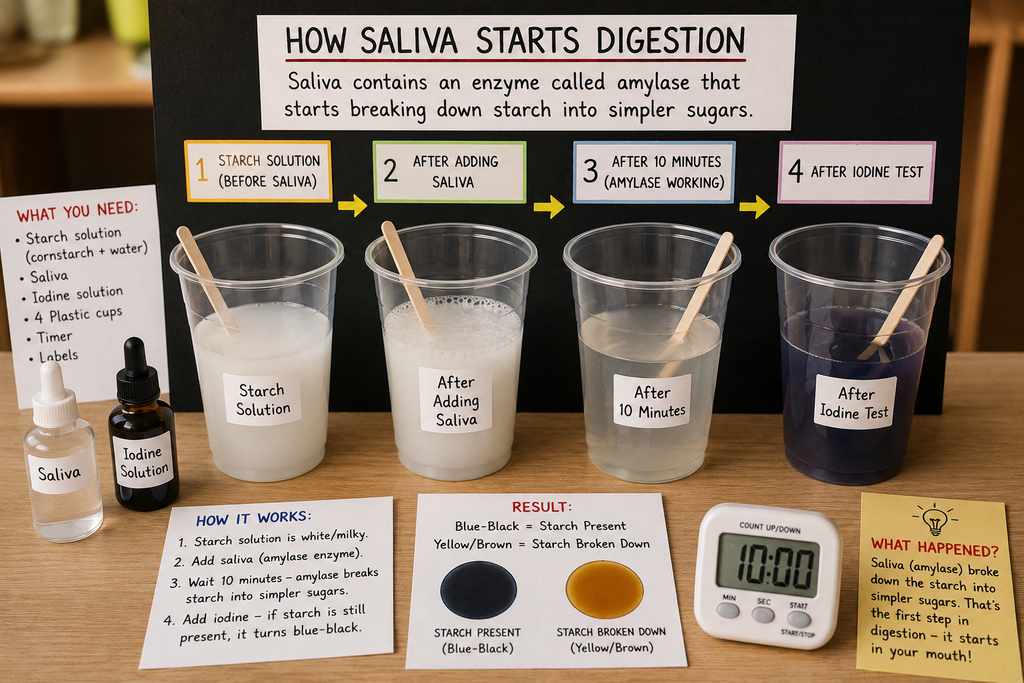
Chew a plain cracker for a while and pay attention to how its taste changes.
Saliva contains an enzyme called amylase, which begins breaking down starch into smaller carbohydrates. As this happens, the food can start tasting sweeter.
What it demonstrates: Digestion begins in the mouth, not the stomach.
For a classroom project, follow your teacher’s instructions and avoid sharing food or saliva samples.
7. How Bile Helps Break Down Fat
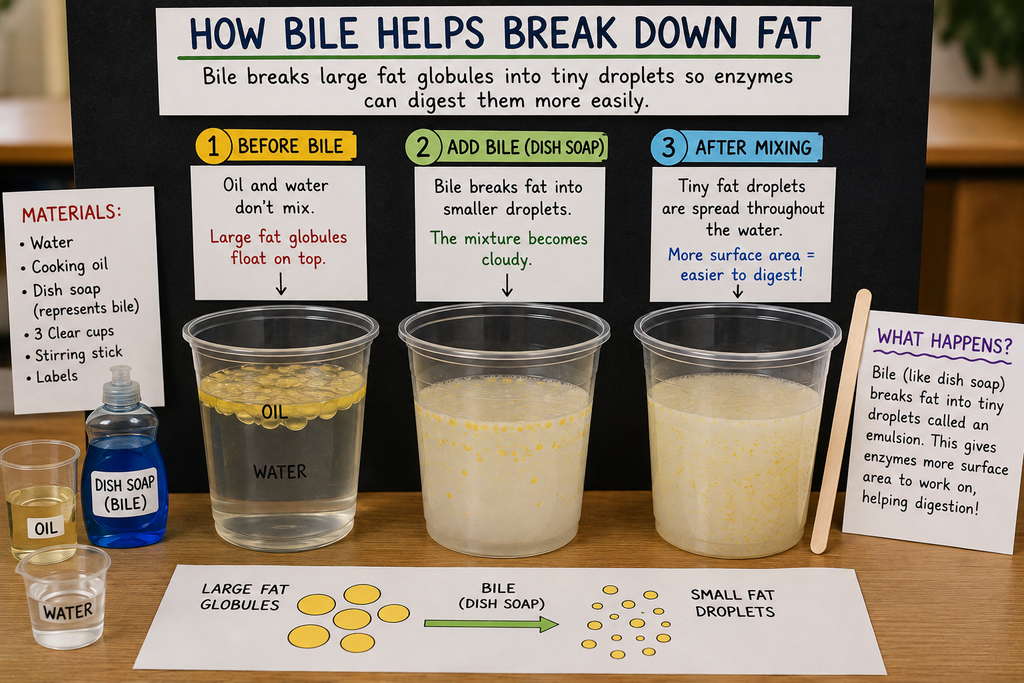
Fill two clear containers with water and add a small amount of cooking oil to each. Add a small amount of dish soap to one container and gently mix both.
The dish soap can be used as a simple model for how bile helps emulsify fats by breaking large fat droplets into smaller droplets.
Remember that dish soap is not the same as bile; it is only a classroom demonstration of the physical effect.
What it demonstrates: How bile helps make fats easier for digestive enzymes to work on.
8. Peristalsis in Action
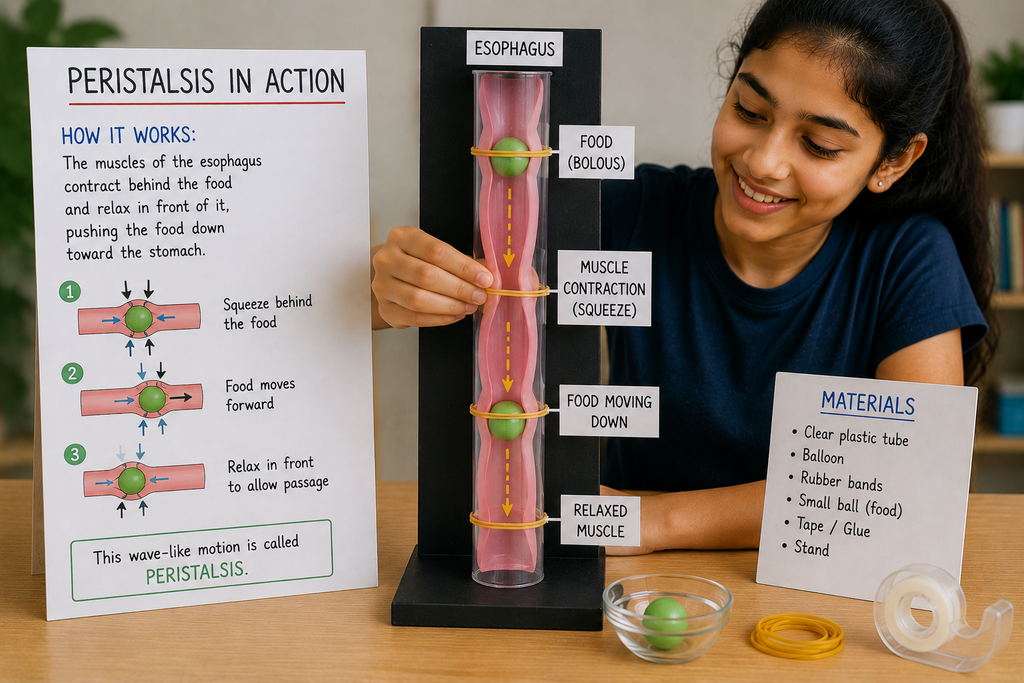
Use a clear flexible tube and a soft food-safe material or suitable demonstration material. Gently squeeze the tube from one end toward the other.
This represents peristalsis, the wave-like muscle contractions that move food through the digestive tract.
What it demonstrates: How muscles help move food through the digestive system.
9. Stomach Acid and Antacid Experiment
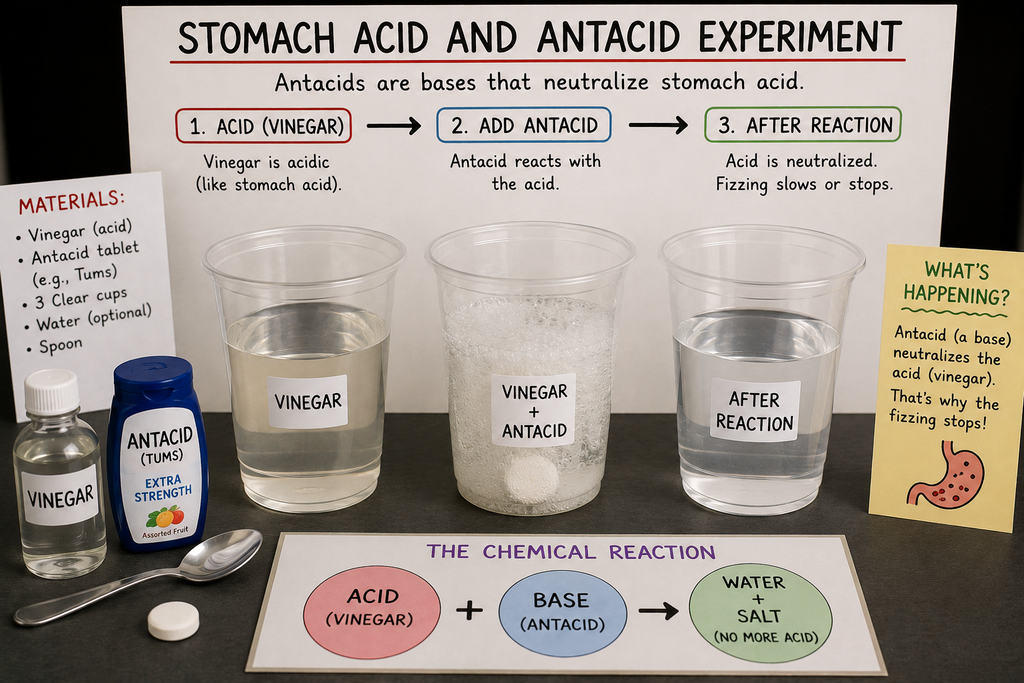
Place equal amounts of vinegar in several containers to create a simple acidic model. Add different antacid products according to their instructions and observe how quickly they react.
You can record the reaction time, amount of fizzing, or other measurable differences.
What it demonstrates: How antacids can neutralize acid.
For a stronger science project, keep the amount of liquid, temperature, and antacid size consistent so your test is fair.
10. How Fiber Absorbs Water
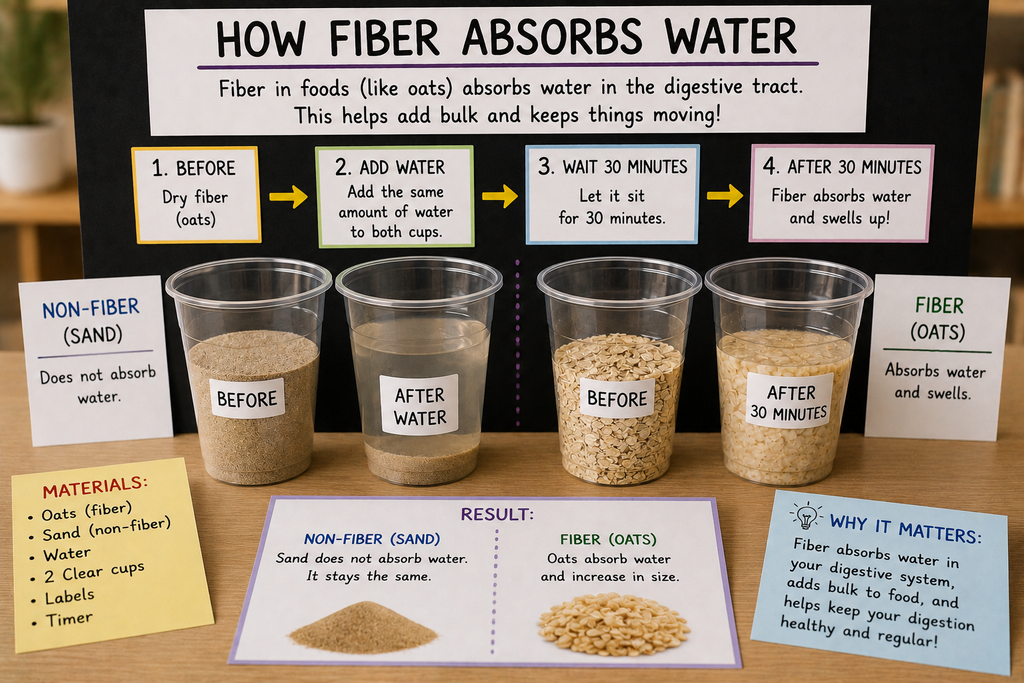
Compare different high-fiber foods or fiber-rich materials in equal amounts of water. Observe how much water they absorb and how their texture changes over time.
You can record your observations at regular intervals and create a simple results table.
What it demonstrates: Some types of dietary fiber can absorb water and contribute to healthy bowel movements.
Posters, Diagrams, and Presentation Projects
If you prefer drawing, designing, or presenting information, these projects can be both educational and creative.
11. Labeled Digestive System Poster
Create a large, colorful digestive system diagram and label the major organs.
Add a short explanation next to each organ describing its main job.
For example:
- Mouth: Chews food and mixes it with saliva.
- Esophagus: Moves food toward the stomach.
- Stomach: Mixes food with digestive juices.
- Small intestine: Absorbs most nutrients.
- Large intestine: Absorbs water and forms stool.
What it demonstrates: The function of each major digestive organ.
12. The Journey of a Cheeseburger
Turn digestion into a comic strip.
Follow a bite of cheeseburger as it travels from the mouth to the esophagus, stomach, small intestine, and large intestine.
Give each organ a short speech bubble explaining what it does.
What it demonstrates: The complete journey of food through the digestive system.
13. Digestive System Flipbook
Create a small flipbook where each page reveals the next stage of digestion.
Start with food entering the mouth and gradually show it moving through the digestive tract.
What it demonstrates: The sequence of digestion in an easy-to-understand format.
14. Digestive Health Infographic
Create an infographic explaining habits that support healthy digestion.
You could include topics such as:
- Eating enough fiber
- Drinking enough water
- Eating a balanced diet
- Staying physically active
- Eating a variety of fruits and vegetables
Use simple illustrations, icons, and short facts instead of large blocks of text.
What it demonstrates: The connection between everyday habits and digestive health.
15. Human vs. Animal Digestive Systems
Compare the human digestive system with that of another animal.
A cow is an interesting choice because its digestive system is adapted to breaking down plant material and has a complex, four-compartment stomach.
You could also compare humans with birds, rabbits, or other animals.
Create a chart showing differences in:
- Diet
- Digestive organs
- Stomach structure
- Digestion time
- Adaptations
What it demonstrates: How digestive systems are adapted to different diets and lifestyles.
Interactive and Creative Digestive System Projects
Want something more unusual? These projects can help your presentation stand out.
16. Digestive System Board Game
Create a board game where players travel through the digestive system.
Players can move from the mouth to the stomach and intestines while answering questions about digestion.
Add special cards such as:
“Your food reached the small intestine. Move forward 2 spaces!”
or
“You forgot to chew properly. Go back one space!”
What it demonstrates: The organs and stages involved in digestion.
17. Interactive Digestive System Slideshow
Create an interactive PowerPoint or digital presentation.
Make each organ clickable so that selecting it reveals its name, function, and an interesting fact.
For example, clicking on the small intestine could reveal:
“Most nutrient absorption takes place here.”
What it demonstrates: The digestive system in an interactive format.
18. Digestive System Song or Rap
Write a short song or rap that lists the digestive organs in order.
For example, your song could help classmates remember:
Mouth → Esophagus → Stomach → Small Intestine → Large Intestine → Rectum → Anus
Add simple facts about what happens at each stage.
What it demonstrates: Understanding and memorization of the digestive process.
19. Edible Digestive System Model
Create a digestive system model using safe foods.
For example, you could use:
- Spaghetti or licorice for the intestines
- A soft food item for the stomach
- Different foods for different organs
Arrange everything on a large plate or tray and label each part.
What it demonstrates: The shape, position, and pathway of the digestive system.
Make sure all ingredients are food-safe and check for allergies before sharing the model.
20. Digestive Disorder Research Project
Choose a digestive health condition and create a research presentation about it.
Possible topics include:
- Acid reflux
- Lactose intolerance
- Celiac disease
- Constipation
- Irritable bowel syndrome (IBS)
Explain the condition, its common symptoms, possible causes or triggers, and how it is generally managed.
Use reliable sources such as textbooks, hospitals, universities, or government health websites.
What it demonstrates: How problems with the digestive system can affect everyday life.
How to Choose the Best Digestive System Project
Not sure which idea to choose? Start by thinking about what type of project you enjoy.
If you like building things
Try the 3D Clay Digestive System, Digestive System in a Bottle, or Cardboard Tube Model.
If you enjoy experiments
Try the Antacid Experiment, Bile Demonstration, or Saliva and Starch Activity.
If you like drawing and designing
Choose the Digestive System Poster, Cheeseburger Journey, or Digestive Health Infographic.
If you want something creative
Try the Board Game, Song or Rap, or Interactive Slideshow.
If you need a quick project
A labeled digestive system poster or 3D clay model can be completed with relatively simple materials.
Tips for Making Your Digestive System Project Better
A good project isn’t only about having a colorful model. Your explanation matters too.
- Choose a project that matches your grade level.
- Keep the digestive organs in the correct order.
- Use clear labels and arrows.
- Explain what each organ does instead of only naming it.
- Use reliable science sources for your facts.
- If you’re doing an experiment, change only one main variable at a time.
- Record your observations in a table or chart.
- Take photos while building your model.
- Practice explaining your project before presenting it.
Final Thoughts
A digestive system project doesn’t have to be complicated to be impressive. A simple model can teach you how food travels through the body, while an experiment can help you understand concepts such as enzymes, stomach acid, bile, and peristalsis.
The best project is one that you can build confidently, explain clearly, and connect to real science.
So whether you choose a 3D model, a science experiment, a colorful poster, or an interactive game, these digestive system project ideas can turn a regular school assignment into a fun learning experience.