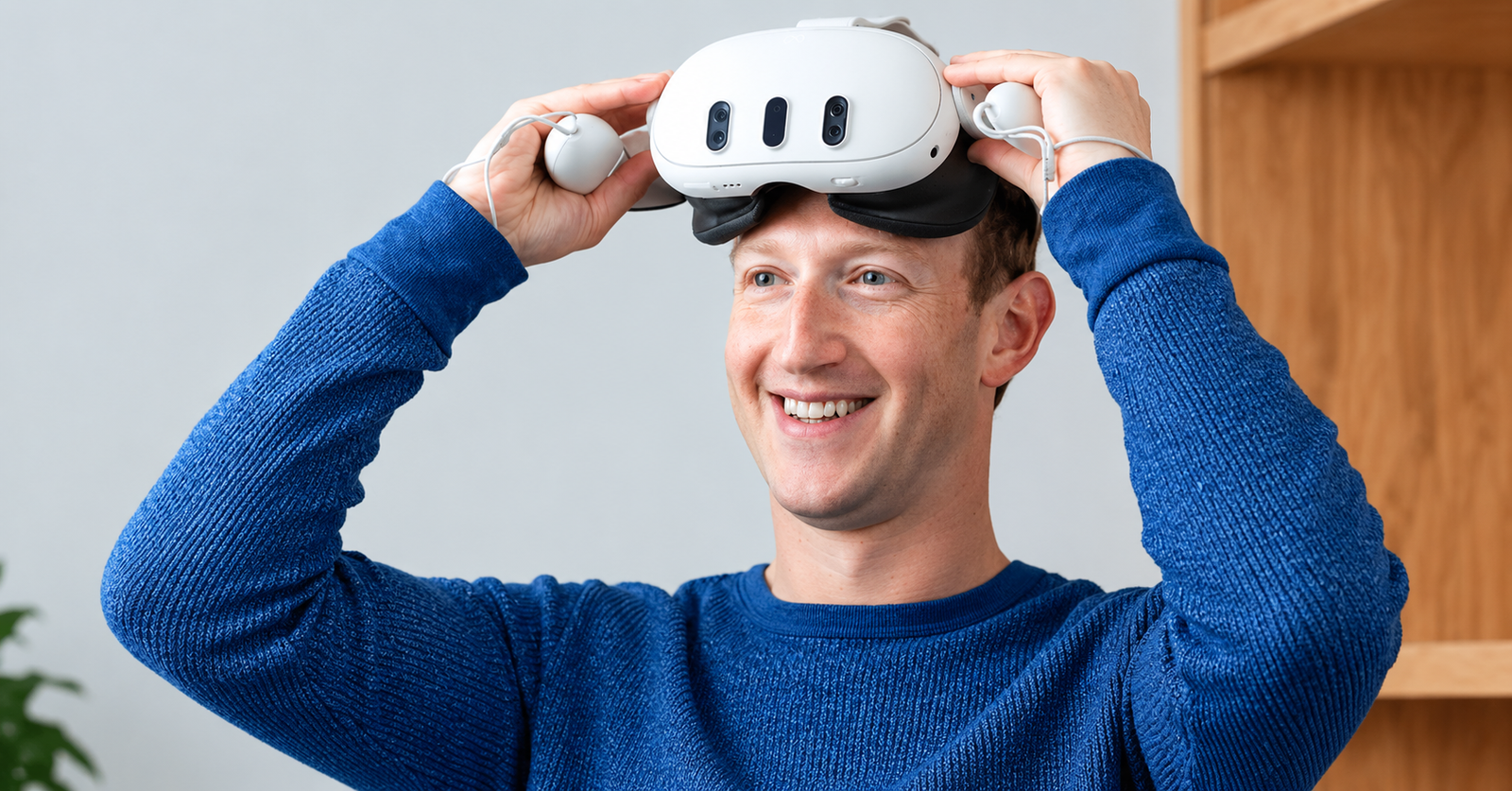
Meta CEO Mark Zuckerberg introduced the company’s first Meta VR Glasses at Connect 2026 on September 23, priced at $1,299.99. The device weighs about 100 grams and is built for cinema, work and gaming rather than full VR headsets like the Meta Quest 3.
Zuckerberg also revealed Muse Charm, a keychain-sized gadget for Meta’s AI agent, along with a camera-free Ray-Ban Meta model and a new generation of the existing Ray-Ban Meta line.
What Meta Announced at Connect 2026?
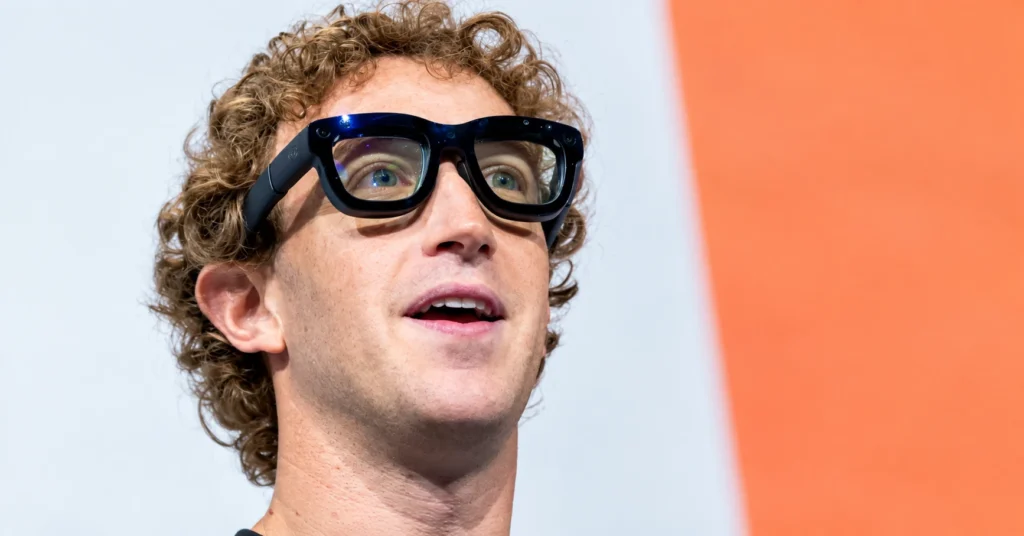
Zuckerberg took the stage at Meta’s annual Connect conference in Menlo Park on September 23 to lay out the company’s hardware plans for the next year. The event has traditionally centered on virtual reality, but this year’s keynote covered AI agents, smart glasses and headsets together.
The Meta VR Glasses were the headline reveal. Zuckerberg described them as the company’s first attempt at putting virtual reality into a glasses-style frame instead of a bulkier headset, according to CNBC. Andrew Bosworth, Meta’s chief technology officer and head of Reality Labs, joined him on stage to demonstrate the device.
Meta VR Glasses Price and Release Date
The Meta VR Glasses will cost $1,299.99 and go on sale in the United States in spring 2027. Meta has not announced international pricing or launch markets beyond the initial US rollout.
That price sits well above Meta’s existing Quest headsets and closer to the territory of Apple’s Vision Pro, though the glasses form factor is meant to set it apart. It also arrives months after Snap’s own $2,195 augmented reality glasses, whose price contributed to a sharp drop in Snap’s stock earlier this year.
The launch also comes after a bumpy stretch for Meta’s VR business. In March, the company reversed a decision to shut down Horizon Worlds on Quest just one day after announcing it, a reminder of how much internal debate still surrounds Meta’s virtual reality strategy even as it pushes new hardware out the door.
iPhone Duo: Apple’s First Foldable iPhone Specs, Price and Release Date
Key Features of the Meta VR Glasses

Meta says the glasses weigh about 100 grams, roughly a fifth the weight of a Meta Quest 3. A cable connects the frames to a separate compute puck that clips onto a pocket or bag, so the processor, battery and storage sit away from the wearer’s face.
The device uses a 5K micro-OLED display Meta calls “Infinite Display,” with a refresh rate of up to 120Hz according to Benzinga. Users control it through voice commands, eye tracking and hand gestures rather than physical controllers.
Meta is pitching three main use cases:
1. Entertainment: Dolby Atmos and Dolby Vision support, plus what Meta says is the first IMAX Enhanced certification for a VR device, aimed at movies and immersive live sports.
2. Productivity: The glasses can connect to external displays over DisplayPort via USB-C and project a virtual keyboard onto a flat surface, letting them double as a portable multi-monitor setup.
3. Gaming: Support for the full Meta Quest game catalog as well as Xbox Cloud Gaming.
Meta also demonstrated full-body, photorealistic VR holograms for video calls, a feature it calls Hologram Calling. Battery life, however, tops out at around three hours of media playback, according to Meta.
Muse Charm and New Ray-Ban Meta Glasses

Zuckerberg saved a surprise for the end of his keynote: Muse Charm, a small handheld device meant to give people voice access to Meta’s Muse AI agent without opening an app or unlocking a phone. Reuters reported the device is roughly the size of an AirPods case and includes a small touchscreen, along with built-in 5G connectivity.
“We’ve packed a lot of technology with this little guy,” Zuckerberg said of Muse Charm, adding that it would be “by far the fastest way to talk to your Muse” for anyone not already wearing smart glasses. He said Meta has built only a handful of prototype units so far and has not set a price, but plans to ship the device by December.
Muse itself launched as a standalone AI agent on September 8 and runs on Meta’s Muse Spark model family. It can handle tasks such as booking appointments and sending emails.
Alongside the VR glasses and Muse Charm, Meta introduced Ray-Ban Meta Audio, a camera-free pair of smart glasses weighing 43 grams and priced at $349. It also showed a third generation of the standard Ray-Ban Meta glasses, extending Meta’s smart glasses range to more than 100 styles in total.
On the accessibility side, Meta said it is turning its existing AI glasses into over-the-counter hearing aids through a feature called Conversation Focus, which amplifies nearby speech.
Why It Matters?
Zuckerberg framed the entire announcement around a shift in strategy. He said that when Meta began building smart glasses years ago, the company expected the metaverse to arrive before advanced AI did. That has since reversed.
“It’s now clear that personal superintelligence will not only come first, it will be much bigger and more important,” Zuckerberg said, according to The Next Web.
The announcement also puts Meta in more direct competition with Apple’s Vision Pro on price and positioning, while its cheaper Ray-Ban Meta lineup continues to compete with Snap’s smart glasses push. Meta’s glasses have already become the most widely sold in the category, giving the company an existing retail and distribution advantage as it adds VR capability to the format.
What Happens Next?
Meta has not confirmed international availability or pricing for the Meta VR Glasses beyond the initial US launch planned for spring 2027.
Muse Charm’s price and full specifications are also still unconfirmed, with Meta targeting a December shipping window. More details are expected as the spring 2027 launch date approaches.
Meta will also need to show that Conversation Focus works reliably as an over-the-counter hearing aid feature once it reaches wider testing, and whether the VR Glasses’ roughly three-hour battery life holds up once the device is out of a controlled demo setting. Both are likely to shape early reviews once the hardware ships.
FAQs
Did Mark Zuckerberg make the Meta glasses?
Meta, the company Zuckerberg leads as CEO, develops the glasses in partnership with EssilorLuxottica for the Ray-Ban Meta line. Zuckerberg personally unveiled the new Meta VR Glasses on stage at Connect 2026 alongside Reality Labs chief Andrew Bosworth.
When did Meta glasses start?
Meta’s smart glasses line began in 2021 with Ray-Ban Stories, a joint project with Ray-Ban’s parent company EssilorLuxottica. The current Ray-Ban Meta glasses, launched in 2023, added Meta AI features and became the company’s best-selling wearable.
Where is Meta Connect 2026?
Meta Connect 2026 was held at Meta’s headquarters campus in Menlo Park, California, on September 23. The keynote featured Zuckerberg’s hardware announcements, with additional developer sessions held the following day.
How much will Meta VR Glasses cost?
The Meta VR Glasses are priced at $1,299.99 in the US. Meta has not announced pricing for other countries or confirmed whether the device will launch outside the US at first.
When will the Meta VR Glasses be available?
Meta said the VR Glasses will go on sale in spring 2027. An exact release date has not been announced, and Meta has not said which retailers will carry the device at launch.
Are Meta VR Glasses worth it?
That depends on what a buyer needs from the device. At $1,299.99, the glasses are priced closer to premium headsets like Apple’s Vision Pro, and their battery life is limited to about three hours of media playback, so people who want longer, uninterrupted use may want to wait for reviews after launch.
Do Meta glasses have a monthly cost?
The Meta VR Glasses themselves do not carry an announced subscription fee. However, Meta’s existing Ray-Ban Meta glasses do tie some AI features to Meta One Premium, a $19.99-a-month plan that extends usage limits on features such as Conversation Focus.
What is Muse Charm?
Muse Charm is a keychain-sized device Meta showed at the end of its Connect 2026 keynote, designed to let people talk to its Muse AI agent without a phone. Meta has not set a price and plans to ship it in December.
What is the Meta Muse AI agent?
Muse is Meta’s personal AI agent, released as a standalone product on September 8, 2026. It runs on the company’s Muse Spark model family and can perform tasks such as booking appointments and sending emails on a user’s behalf.
How is the Meta VR Glasses different from the Meta Quest 3?
Meta says the VR Glasses weigh about 100 grams, roughly a fifth the weight of the Quest 3 headset, by moving the processor, battery and storage into a separate compute puck. They are also priced well above the Quest 3 and are built primarily as a glasses-style alternative rather than a replacement.
What is Ray-Ban Meta Audio?
Ray-Ban Meta Audio is a camera-free smart glasses model Meta unveiled at Connect 2026, weighing 43 grams. It is priced at $349 and is aimed at people who want Meta’s AI and audio features without a built-in camera.