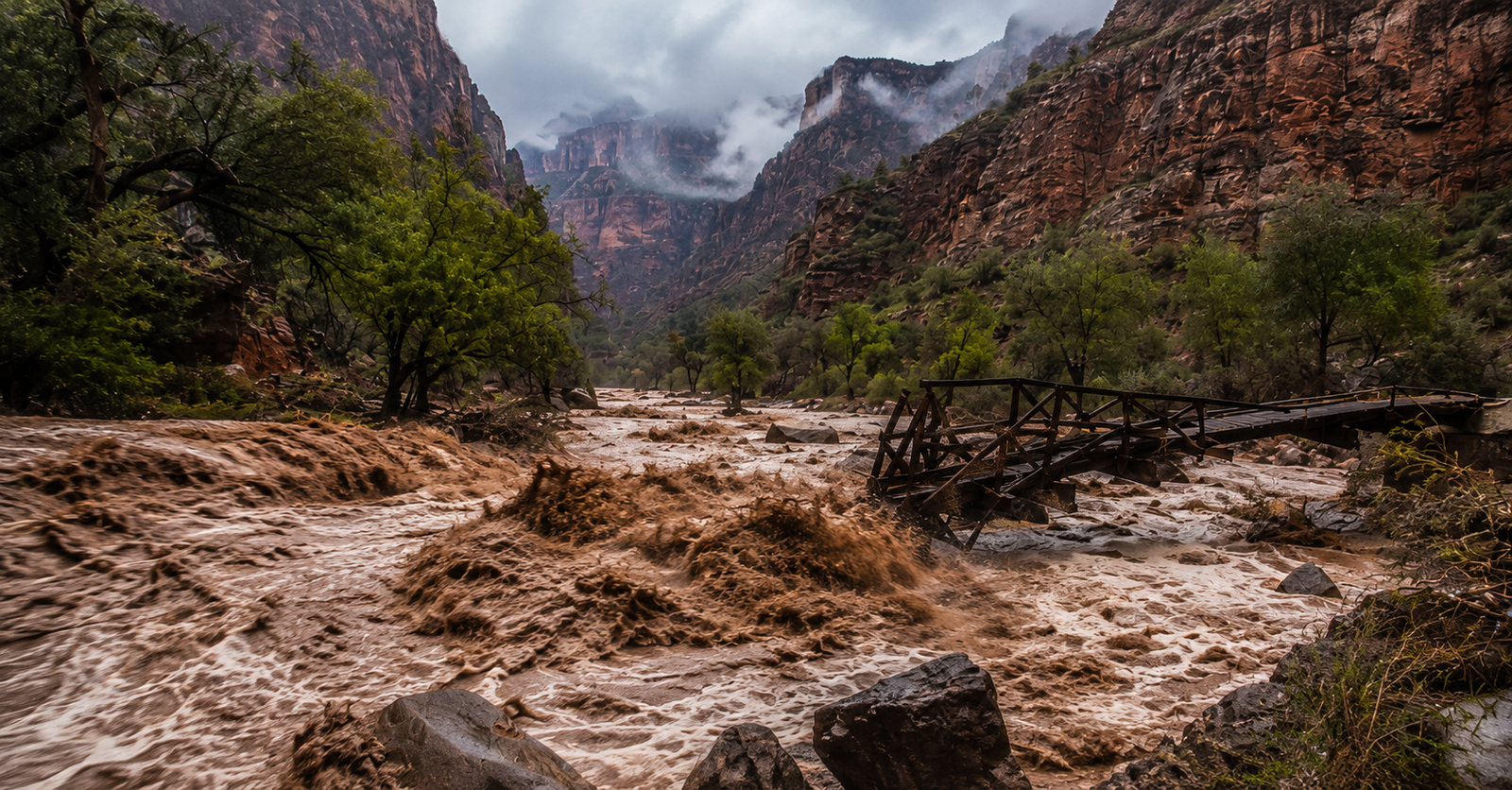
A sudden flash flood swept through part of the Grand Canyon on Saturday afternoon, killing one hiker and leaving around 15 people unaccounted for.
The flood hit the Bright Angel Creek area at about 2:30 p.m. local time, catching hikers and campers in the canyon off guard. The National Park Service said rescue teams recovered the body of a 46-year-old man near Crystal Rapids along the Colorado River on Sunday evening.
Officials have not released the man’s identity. The number of people still missing has also been revised, dropping from an earlier estimate of more than 20 to around 15.
Heavy Rain Turned Bright Angel Creek Into a Flash Flood
The flooding followed a series of strong monsoon storms that brought intense rainfall to the Grand Canyon.
Some areas received close to an inch of rain per hour, while parts of the canyon recorded between half an inch and one inch of rainfall in just 30 minutes.
Because of the canyon’s steep terrain, the water quickly rushed downhill. Bright Angel Creek runs from the North Rim toward the Colorado River, dropping roughly 6,000 feet along its route.
That sudden surge of water swept through hiking areas and campgrounds, leaving little time for people in the canyon to react.
62 People Airlifted to Safety
The flooding struck the Bright Angel Canyon area near Phantom Ranch, a popular stopping point deep inside the Grand Canyon. The lower section of the North Kaibab Trail was also affected.
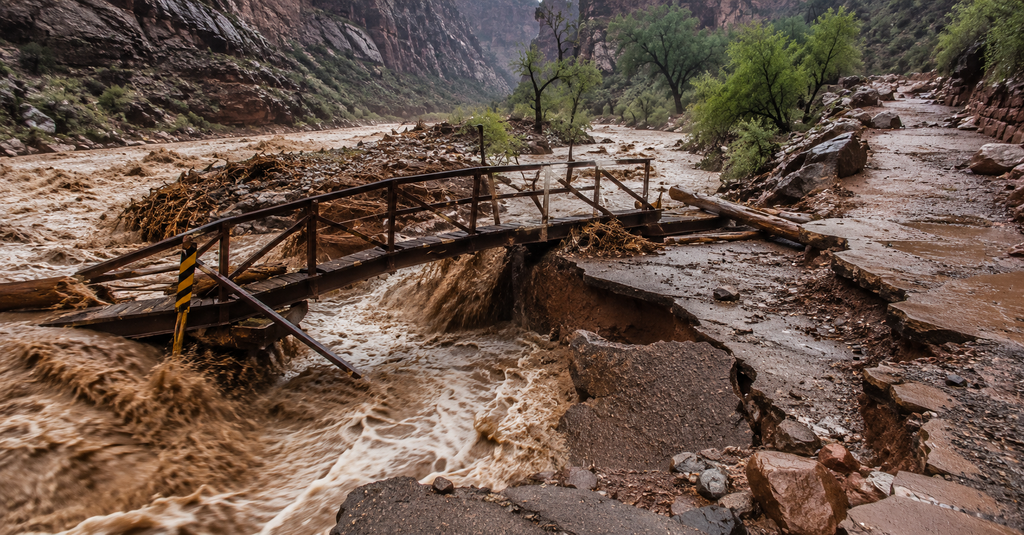
Floodwaters destroyed footbridges crossing the creek and dramatically changed parts of the creek bed. The force of the water even created what appeared to be a new rapid.
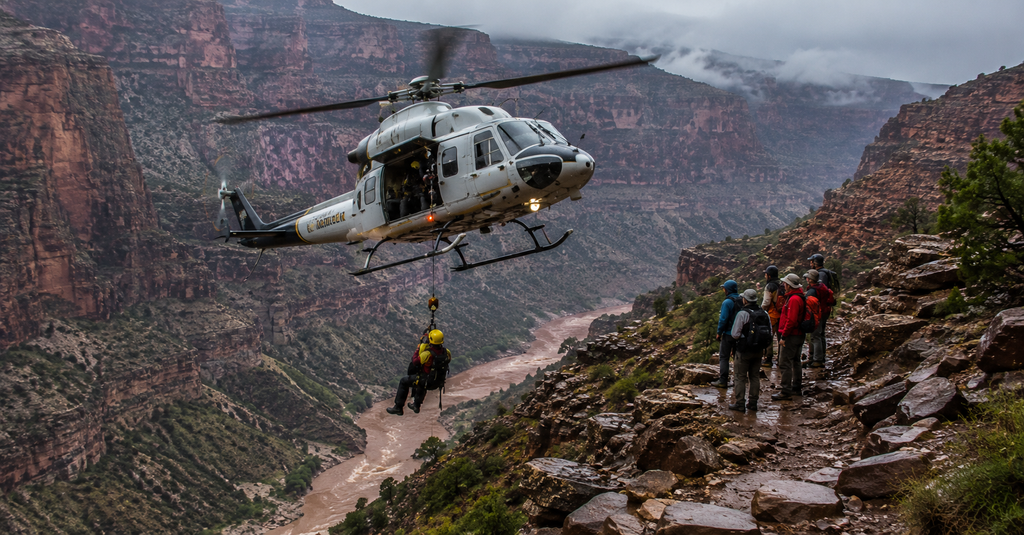
Rescue crews began air evacuations Saturday and continued operations into Sunday. A total of 62 people were eventually airlifted out of the affected area.
Those rescued were taken to the Maswik Lodge Cafeteria on the South Rim, where the American Red Cross provided assistance.
No injuries were reported among the people rescued. One evacuee described the situation as terrifying as the water continued to rise, saying they feared they would not survive.
The National Park Service is asking anyone who may have information about hikers or backpackers in the Bright Angel Creek or Phantom Ranch areas on Saturday afternoon to come forward.
Flood Destroys Inner Canyon Water Pipeline
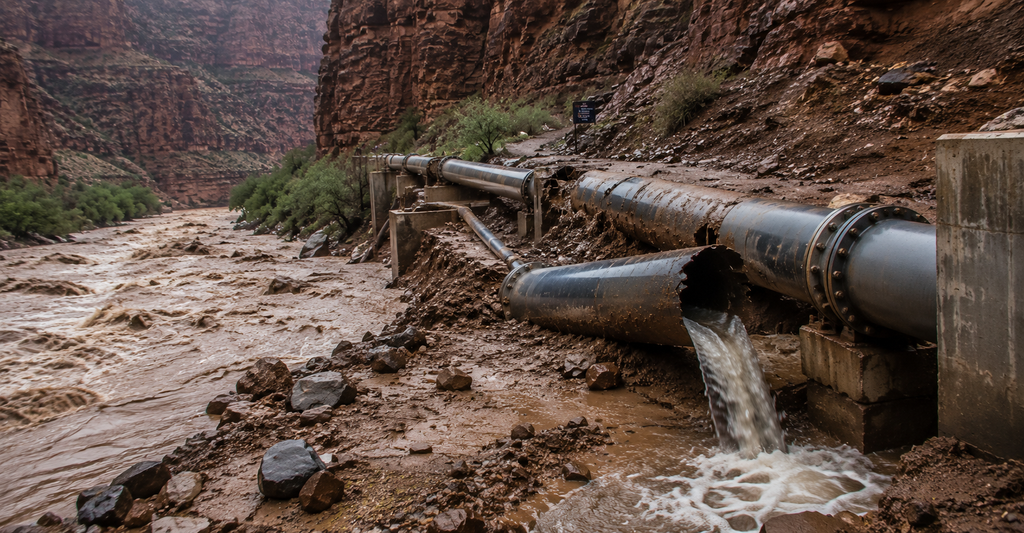
The flooding also caused major damage to the Grand Canyon’s water infrastructure.
The only pipeline supplying water to the inner canyon was destroyed during the disaster. The system provides water for both visitors and people who live and work in the canyon year-round.
Emergency water restrictions went into effect Monday as officials work to manage the limited supply.
Overnight lodging inside the park has also been suspended. The closures affect properties including El Tovar, Bright Angel Lodge, Maswik Lodge and Phantom Ranch, along with Yavapai Lodge and Trailer Village.
The National Park Service has not provided a reopening date.
The timing could create additional problems for visitors, as the closures come just ahead of the Labor Day holiday weekend, traditionally one of the busiest travel periods at the park.
Colorado River Reopens After Temporary Closure
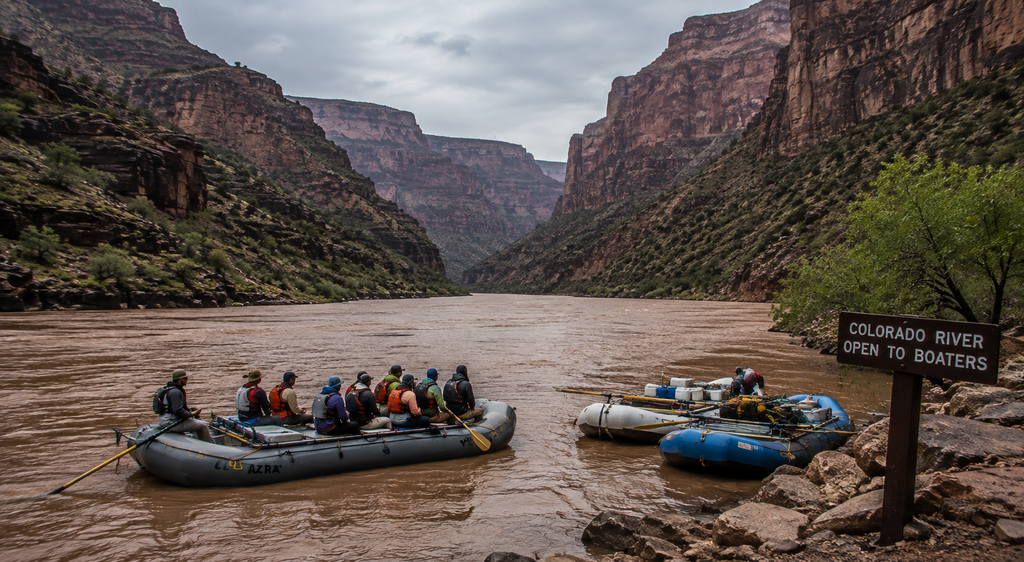
The Colorado River was temporarily closed to boaters after the flooding because officials were concerned about metal debris and damaged structures being carried downstream.
The river has since reopened, according to Isabell Holt, a spokesperson for Arizona Raft Adventures.
Commercial rafting trips are once again allowed to launch, although conditions in the area remain unpredictable.
Visitors with upcoming hiking or rafting plans are being advised to contact their commercial outfitter or the National Park Service River Permits Office before traveling.
More Storms Could Complicate the Search
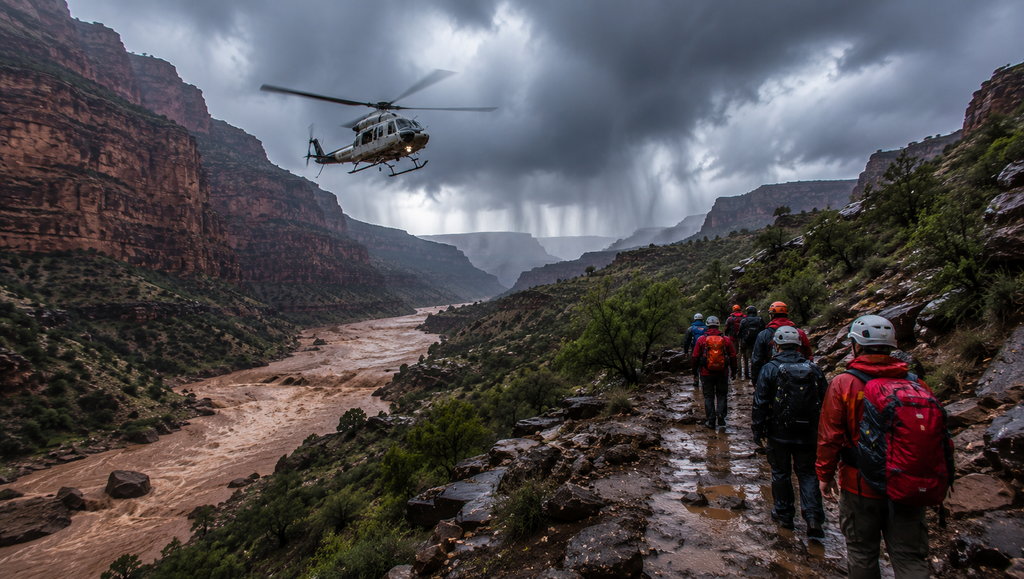
The search for the missing hikers could become more difficult as additional storms move through the region.
Forecasters warned of more rain and thunderstorms on Monday, with a flood watch remaining in effect for the area. Another round of storms could bring the risk of flash floods, debris flows and rockfalls.
National Park Service search-and-rescue crews are working with the Arizona Department of Public Safety to locate those still missing.
Ground teams are searching the inner canyon while aircraft are being used to check areas that are difficult to reach on foot.
Grand Canyon Flash Floods Can Develop Within Minutes
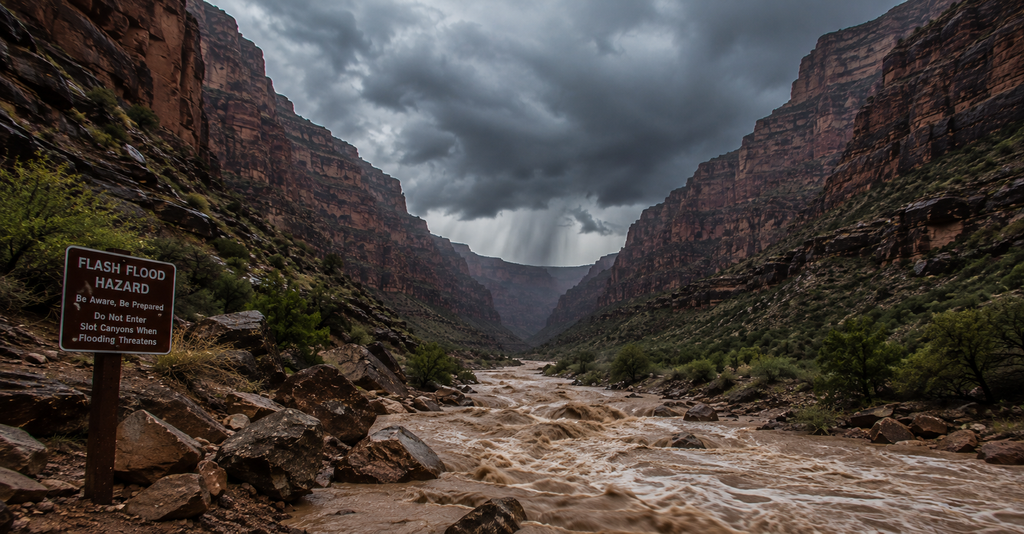
Flash flooding is one of the major hazards in the Grand Canyon, particularly during the summer monsoon season.
The canyon’s steep walls and narrow side channels can funnel large amounts of water into lower areas extremely quickly. A storm several miles away can send a powerful surge of water into a canyon corridor even when there is little or no rain where hikers are standing.
For now, search crews remain focused on locating everyone who is still unaccounted for while park officials work to restore the damaged water system.
The National Park Service has not said how long the search will continue or when all affected facilities will reopen.
FAQ
What happened in the Grand Canyon flood?
A flash flood swept through the Bright Angel Creek and Phantom Ranch areas of the Grand Canyon on Saturday afternoon after heavy monsoon rainfall. The flooding damaged trails, bridges and the inner canyon water pipeline.
How many people are missing after the Grand Canyon flood?
Around 15 people remain unaccounted for, according to the National Park Service. The figure was revised down from an earlier estimate of more than 20 people.
Did anyone die in the Grand Canyon flood?
Yes. Rescue crews recovered the body of a 46-year-old man near Crystal Rapids along the Colorado River on Sunday evening.
Where did the Grand Canyon flood happen?
The flooding affected the Bright Angel Creek corridor, Bright Angel Canyon, Phantom Ranch and parts of the lower North Kaibab Trail inside Grand Canyon National Park.
How many people were rescued from the Grand Canyon flood?
Rescue crews airlifted 62 people from the affected areas to safety. The evacuees were taken to the South Rim for assistance.
Is the Grand Canyon closed because of the flood?
Some areas and overnight lodging have been closed because of the damage and water supply problems. Visitors should check the latest National Park Service guidance before traveling.
Is Phantom Ranch closed?
Overnight stays at Phantom Ranch have been suspended following damage caused by the flooding and the loss of the inner canyon water supply.
Is the Colorado River open after the Grand Canyon flood?
The Colorado River was temporarily closed because of concerns about debris and damaged structures. It has since reopened, although conditions can change quickly.
What caused the Grand Canyon flash flood?
Heavy monsoon storms produced intense rainfall over a short period. The Grand Canyon’s steep terrain and narrow drainage channels caused the water to move rapidly into lower areas.
Are more flash floods possible in the Grand Canyon?
Yes. Additional thunderstorms and rainfall can create a continuing risk of flash floods, debris flows and rockfalls. Visitors should monitor weather and park alerts closely.
Is it safe to visit the Grand Canyon right now?
Conditions can change quickly after a major flood. Anyone planning a visit should check current trail, lodging and weather advisories from the National Park Service before entering affected areas.