U.S. President Donald Trump has threatened to stop Bombardier from selling aircraft in the United States unless the Canadian aerospace company moves manufacturing into the country, escalating tensions between Washington and Ottawa.
Donald Trump has once again put Canada’s aerospace industry in the spotlight.
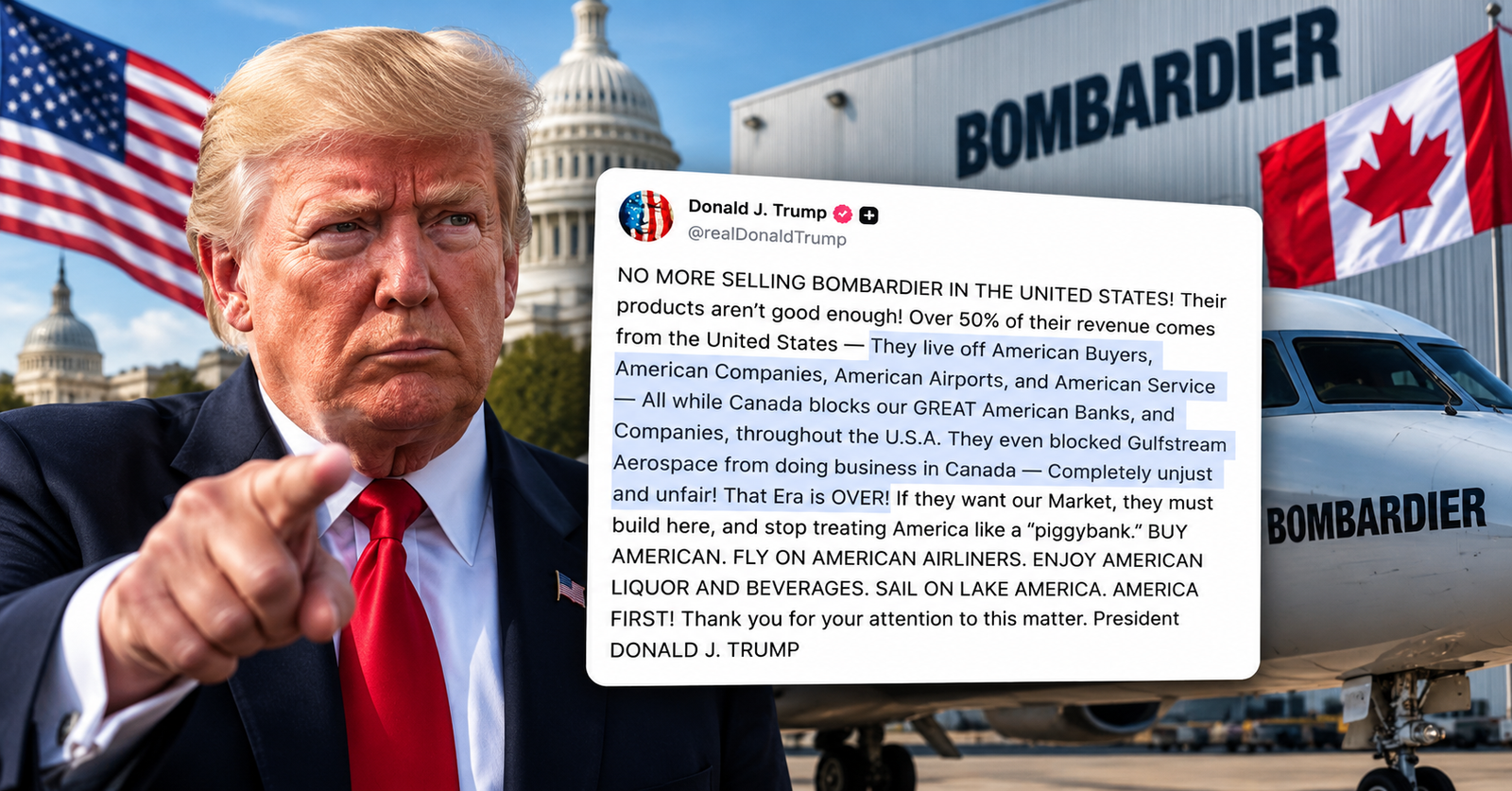
In a post on Truth Social on September 7, Trump declared that there should be “NO MORE SELLING BOMBARDIER IN THE UNITED STATES,” criticizing the Canadian aircraft maker and arguing that its products are not good enough.
Trump said Bombardier benefits significantly from the American market while, in his view, Canadian policies make it difficult for U.S. companies to compete in Canada.
“If they want our Market, they must build here,” Trump wrote, accusing the company of treating the United States like a “piggybank.”
The comments represent another escalation in the growing trade dispute between the United States and Canada. However, the White House has not yet explained exactly how the proposed restriction would be implemented.
Trump Targets Bombardier’s U.S. Market
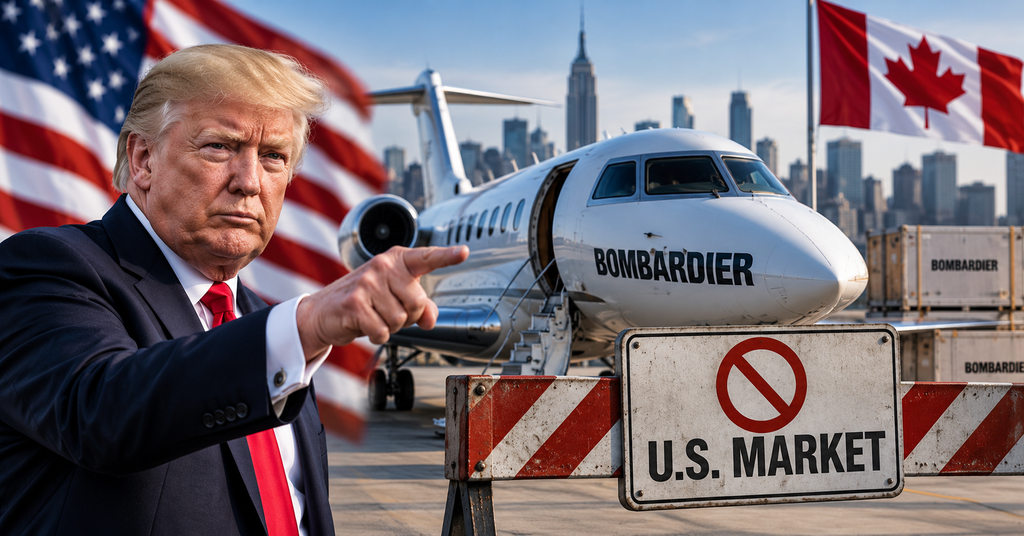
Bombardier is a major Canadian aerospace company best known for its business jets and other aviation products.
The United States is an extremely important market for the company. About half of the roughly 5,100 aircraft operated by Bombardier customers are located in the United States.
That makes any potential restriction on Bombardier’s access to American customers particularly significant.
Trump argued in his social media post that Bombardier receives substantial revenue from the United States and benefits from American buyers, companies, airports and service providers.
His message was straightforward: If Bombardier wants continued access to the American market, the company should manufacture aircraft inside the United States.
However, there is currently no detailed government order explaining what products would be affected or when any restriction could take effect.
Read more:Trump Calls Canada’s Dollar Imbalance With U.S. ‘Unacceptable’ as Trade Tensions Rise
The Gulfstream Dispute Is Behind the Latest Tension
The latest confrontation has been building for months.
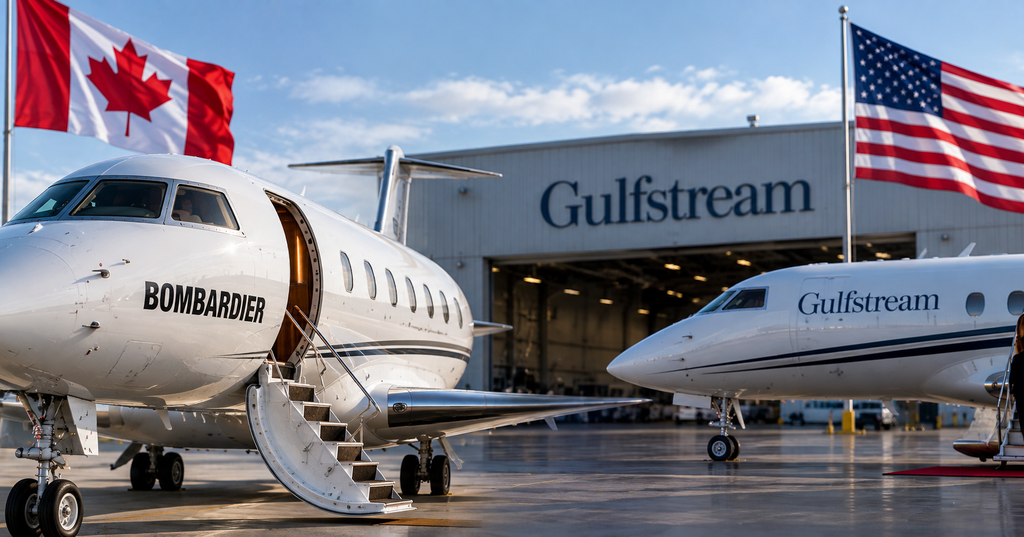
Earlier this year, Trump targeted Bombardier during a separate dispute involving Gulfstream Aerospace, a U.S. business-jet manufacturer and Bombardier competitor.
In January, Trump said the United States was decertifying Bombardier Global Express business jets and threatened a 50% import tariff on aircraft made in Canada.
The threats were linked to Canada’s certification of several Gulfstream aircraft.
Neither the threatened decertification nor the 50% aircraft tariff ultimately happened in the way Trump initially proposed. Canada later certified several Gulfstream aircraft.
Despite that, the disagreement appears to have continued.
Trump’s latest comments bring Bombardier back to the center of the dispute and shift the focus toward where the company manufactures its aircraft.
Bombardier Already Has a U.S. Manufacturing Presence
One important detail is that Bombardier already has operations in the United States.
The company has a defense division with a factory in Kansas, where aircraft are prepared for special-mission purposes.
However, Trump’s latest demand appears to go further.
His statement suggests that Bombardier should manufacture aircraft in the United States if it wants to continue selling them to American customers.
That could potentially require the company to expand its American manufacturing footprint.
Such a move could create additional investment and jobs in the United States, but it could also increase production costs and require changes to Bombardier’s existing supply chain.
Bombardier Is Expanding Production in Canada
Trump’s comments come at an interesting moment for Bombardier’s manufacturing strategy.
Just days before Trump’s latest statement, Bombardier announced that it would acquire a Canadian factory from Mitsubishi Heavy Industries.
The facility in Mississauga, Ontario, manufactures wings for Bombardier’s Global 5500 and Global 6500 business jets.
The deal is expected to give Bombardier greater control over part of its supply chain and manufacturing operations.
That development could become more significant if Washington pressures the company to move additional production into the United States.
Bombardier could ultimately face pressure to balance its Canadian manufacturing base with a larger American production presence.
Read more:Canada Announces $7.5 Billion Support Package Amid New US. Tariffs
What Could Trump’s Demand Mean for American Buyers?
The biggest question is what happens to U.S. customers if the administration actually introduces restrictions on Bombardier aircraft.
Bombardier has a substantial customer base in the United States, meaning any restrictions could affect both the company and American buyers.
If Canadian-built Bombardier aircraft were restricted from entering the U.S. market, American customers could potentially have fewer choices in the business-jet market.
That could benefit U.S.-based competitors such as Gulfstream.
However, the actual impact would depend on the details of any policy introduced by the Trump administration.
For now, Trump’s statement does not provide a detailed explanation of whether the United States would impose tariffs, restrict aircraft certifications, block imports or use another mechanism.
There is also no indication that Bombardier aircraft already operating in the United States would suddenly be grounded.
The immediate issue is access to the American market and where future aircraft are manufactured.
Another Chapter in the U.S.–Canada Trade Fight
The Bombardier dispute is part of a much wider disagreement between Washington and Ottawa.
Trump has repeatedly pushed companies to manufacture more products inside the United States and has used tariffs and other trade measures to pressure foreign businesses.
The Bombardier situation fits directly into that approach.
The message from Trump is essentially that companies relying heavily on American consumers should also contribute to American manufacturing.
For Bombardier, however, moving additional production could be complicated.
Aircraft manufacturing depends on highly specialized facilities, workers, suppliers and certification processes. Shifting production from one country to another cannot necessarily happen overnight.
The company could therefore face a difficult choice if Washington turns Trump’s latest statement into formal policy.
Read more:Doug Ford Claps Back After Trump Renames Lake Ontario “Lake America”
Bombardier’s Strong U.S. Connection
Despite being headquartered in Canada, Bombardier already has a deep connection to the U.S. market.
About half of the approximately 5,100 aircraft operated by Bombardier customers are located in the United States.
The company also has a U.S. defense manufacturing presence.
That means the relationship between Bombardier and the United States is already significant.
Any major restriction could therefore have consequences beyond the company itself, potentially affecting suppliers, customers, maintenance operations and other businesses connected to the aircraft industry.
What Happens Next?
For now, the key question is whether Trump’s statement will become an official U.S. government policy.
The White House has not explained how it would enforce the proposed restriction, and Bombardier has not publicly responded to Trump’s latest comments.
Several possibilities remain open.
The administration could introduce new tariffs, impose regulatory restrictions, pressure Bombardier to increase U.S. production or use negotiations with Canada to resolve the dispute.
Bombardier could also face pressure from investors and customers to clarify how it plans to protect its access to the American market.
For now, Trump’s latest warning is another sign that aerospace has become an important part of the broader U.S.–Canada trade dispute.
If Washington follows through with formal restrictions, Bombardier could be forced to make major decisions about where it manufactures aircraft and how it serves its largest markets.
For the moment, however, the exact policy remains unclear.
FAQ
Is Trump banning Bombardier aircraft in the U.S.?
Trump has threatened to stop Bombardier from selling aircraft in the United States unless the company manufactures them there. However, the White House has not yet explained how the proposed restriction would be implemented.
Why is Trump targeting Bombardier?
Trump says Bombardier benefits heavily from the U.S. market while Canadian policies have made it difficult for American companies to compete in Canada. His latest comments are also connected to an earlier dispute involving Bombardier and U.S. rival Gulfstream.
Does Bombardier manufacture aircraft in the United States?
Yes. Bombardier already has a U.S. defense manufacturing facility in Kansas that prepares aircraft for special-mission purposes.
How important is the U.S. market to Bombardier?
The United States is a major market for Bombardier. About half of the approximately 5,100 aircraft operated by Bombardier customers are located in the United States.
Could Trump impose tariffs on Bombardier?
Trump previously threatened a 50% tariff on aircraft made in Canada during the earlier Gulfstream dispute. Whether the administration will introduce new tariffs as part of the latest dispute remains unclear.
What does Bombardier’s Canadian factory deal mean?
Bombardier announced plans to acquire a Mitsubishi Heavy Industries facility in Mississauga, Ontario. The factory manufactures wings for Bombardier’s Global 5500 and Global 6500 business jets.
Will Bombardier aircraft already in the U.S. be affected?
There is currently no indication that aircraft already operating in the United States will be grounded. Trump’s latest statement focuses on future sales and manufacturing, while the details of any potential policy have not been announced.
What happens next?
The next major development will depend on whether the Trump administration turns the statement into a formal trade, regulatory or manufacturing policy and how Bombardier and the Canadian government respond.