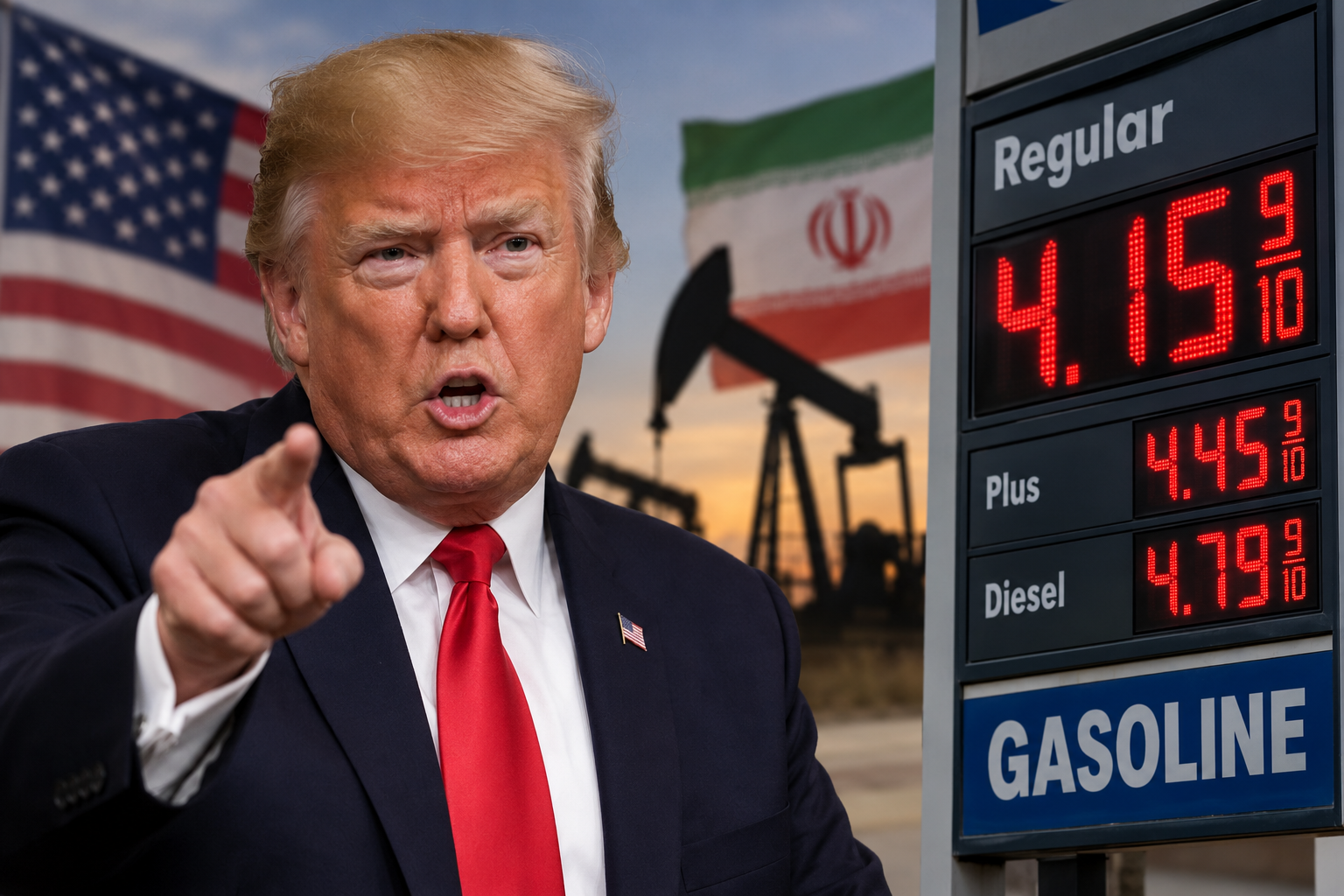
US President Donald Trump says Americans could eventually see gasoline prices fall below $2 a gallon once the United States wins its war with Iran.
Trump made the prediction in a Truth Social post on Monday as oil prices remained elevated and gasoline prices across the country hovered around record levels.
“Oil prices will drop precipitously, like everything else is dropping (but more!), when we WIN the war with Iran,” Trump wrote. “Three Dollars a gallon, but ultimately, below Two Dollars a gallon.”
Trump also repeated his warning that Iran will not be allowed to develop a nuclear weapon.
“It will all happen quickly, and Iran will never have a Nuclear Weapon. MAGA!” he added.
The timing of the statement stands out. Americans are currently paying more than $4 a gallon on average for regular gasoline, making Trump’s prediction of prices below $2 a gallon a very different picture from what drivers are seeing today.
Read more:Crude Oil Jumps After Trump’s ‘Crushing’ Economic Threat to Iran
Gas prices are near record highs right now
For drivers, the immediate reality is much less encouraging.
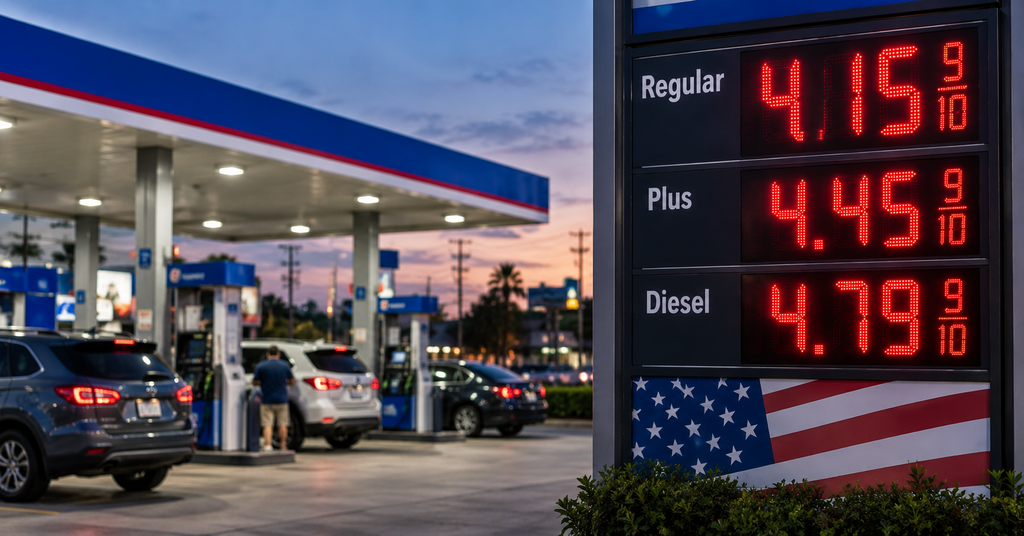
The national average for regular gasoline was around $4.15 a gallon on September 8, according to AAA. Prices have climbed sharply as the conflict has added fresh uncertainty to the global oil market.
The Labor Day period also saw the highest gasoline prices ever recorded for the holiday, with the national average reaching roughly $4.14 a gallon.
That is a big jump from the prices Americans were seeing earlier this year.
Gasoline prices can vary considerably from state to state. Drivers in California, for example, typically pay much more than motorists in states where taxes and fuel costs are lower.
That difference is important because the price Americans pay at the pump is not determined by crude oil alone.
Refining costs, transportation, distribution, taxes and local supply all play a role.
So even if crude oil prices fall sharply, it does not automatically mean drivers will immediately see gasoline prices drop by the same amount.
A national average below $2 would therefore be a major change from today’s market.
Oil prices climbed as the Iran conflict escalated
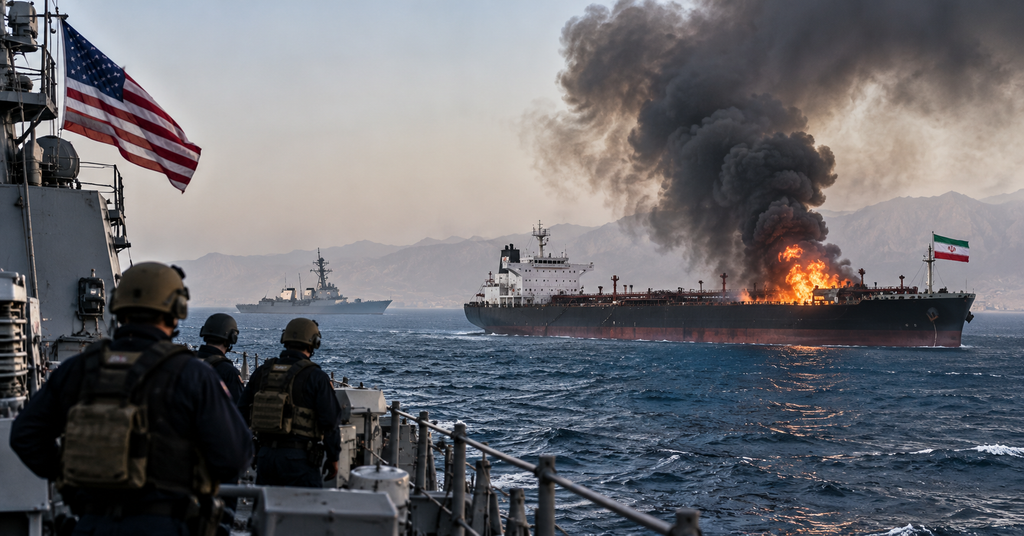
Trump’s comments came as oil markets continued to react to the fighting between the United States and Iran.
One of the biggest concerns for traders is the Strait of Hormuz, a narrow waterway between the Persian Gulf and the Gulf of Oman.
The strait is one of the most important oil shipping routes in the world. Any major disruption there can quickly affect the global energy market.
As tensions increased, oil prices moved sharply higher. Brent crude has been trading close to $100 a barrel as traders watch developments in the region.
The concern is not simply about how much oil is being produced.
It is also about whether that oil can actually reach buyers.
If tankers cannot safely move through the region, even countries that are far away from the conflict can feel the effects through higher global oil prices.
That is one reason the Iran conflict has become such an important issue for American drivers.
Read more:Trump’s Venezuela Oil Deal: What It Really Means for the U.S.
US strikes Iranian oil tankers
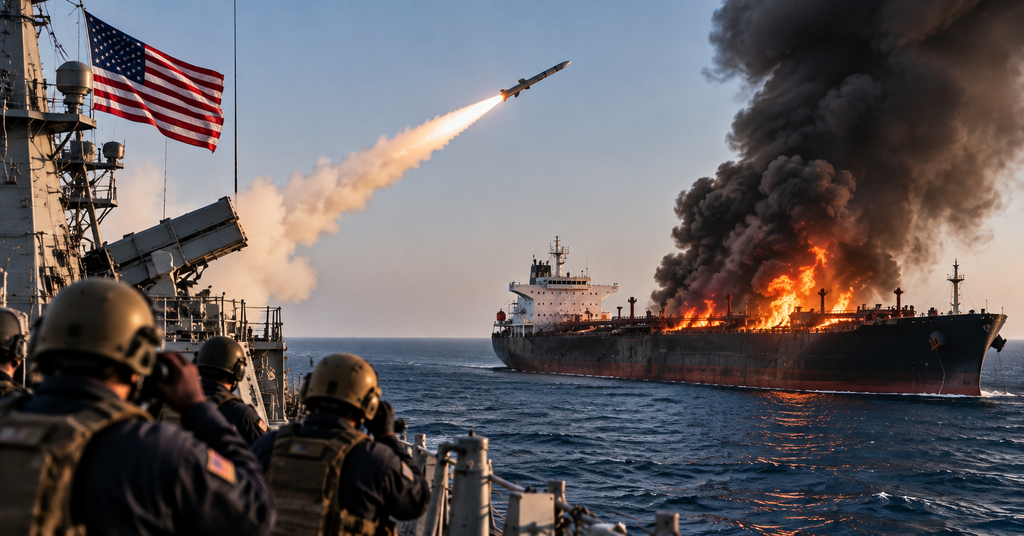
The military situation has also begun affecting oil-related infrastructure and shipping.
US Central Command said American forces struck three Iranian crude oil carriers on September 5 after Iran launched ballistic missiles toward two US Navy warships.
CENTCOM identified the vessels as the M/T Downy, M/T Stark 1 and M/T Kylo.
According to CENTCOM, the first two tankers were disabled, while the third vessel was destroyed after its crew abandoned the ship.
The command also said a US aircraft carrier and a guided-missile destroyer avoided Iranian attacks in the region and that there were no American casualties.
The strikes have added another layer of uncertainty to an already tense oil market.
Iran has also warned that continued attacks on its energy infrastructure could trigger retaliation.
That creates a difficult situation for oil traders.
Every new attack raises concerns about supply, shipping and infrastructure, while any sign of de-escalation could push prices back down.
Why getting gas below $2 won’t be easy
Trump did not give a specific date for when gasoline could fall below $2 a gallon.
And that is perhaps the biggest question surrounding his prediction.
For gasoline to fall from around $4.15 to below $2, the market would need to change dramatically.
First, crude oil prices would probably need to fall substantially.
That could happen if the Iran conflict ends, the Strait of Hormuz returns to normal operations and fears of further supply disruptions disappear.
But crude oil is only one part of the final gasoline price.
Refineries have to turn crude oil into gasoline, and that process costs money. The finished fuel then has to be transported and distributed before it reaches a gas station.
Taxes also add to the final price.
The federal gasoline tax is 18.4 cents per gallon, while state taxes vary widely across the country. Together, fuel taxes create a significant baseline cost that remains even when crude prices fall.
That means getting gasoline below $2 would require much more than simply seeing oil prices decline.
Supply would need to be strong, refinery operations would need to remain healthy and demand would need to stay under control.
Read more:Trump Slams Biden Over Crypto Crackdown, Warns of China Threat
The Strait of Hormuz could decide what happens next
For the oil market, few places matter more right now than the Strait of Hormuz.
The waterway handles a major portion of the world’s oil shipments. Because of that, even the threat of a prolonged disruption can send prices higher.
The current conflict has already affected shipping activity through the region.
Some producers have looked for alternative routes to move oil, helping prevent an even larger supply shock.
But those alternatives have limits.
If the conflict continues for a long time, or if major energy infrastructure is damaged, the pressure on global oil supplies could become much more serious.
On the other hand, a ceasefire or agreement that allows shipping to return to normal could have the opposite effect.
Oil traders could quickly remove some of the geopolitical risk currently built into prices.
That could bring crude prices down and eventually provide some relief at U.S. gas stations.
What would it take for gas to reach $2?
There is no single number that guarantees gasoline will reach $2.
Several things would have to happen at the same time.
Oil prices would need to fall. A major drop in crude prices would reduce one of the biggest costs behind gasoline.
Shipping would need to stabilize. Normal traffic through the Strait of Hormuz would reduce fears of further supply disruptions.
Refineries would need to keep producing. Strong refinery operations would help rebuild gasoline supplies.
Demand would need to remain manageable. If Americans use less gasoline, prices can come under pressure.
Taxes and other costs would remain important. Even with cheaper crude, gasoline still carries federal and state taxes and other expenses.
If all of those factors move in the right direction, gasoline could fall considerably.
But reaching a national average below $2 would still be a major move.
Trump has pushed lower energy prices before
Trump has made lower energy prices a major part of his economic message.
His argument has generally been straightforward: more energy production and greater supply should eventually mean cheaper fuel for consumers.
Gas prices matter politically because Americans notice them every time they fill their cars.
A driver may not follow crude oil futures or refinery utilization, but they know immediately when the price on the pump changes.
That is why Trump’s latest prediction is likely to attract attention.
For a driver currently paying more than $4 a gallon, hearing the president talk about gasoline eventually falling below $2 is a significant promise.
The question is whether market conditions will actually allow that to happen.
What happens if the Iran war ends?
An end to the conflict could provide immediate relief to oil markets.
If fighting stops and the Strait of Hormuz becomes safe for commercial shipping again, traders could begin expecting more reliable oil supplies.
That could push crude prices lower.
Gasoline prices would not necessarily fall overnight, though.
There is normally a delay between changes in crude oil prices and changes at the pump. Refiners, distributors and retailers all operate within the supply chain, and local prices can respond at different speeds.
Still, an end to the conflict would remove one of the biggest sources of uncertainty currently affecting the market.
If crude prices then continue falling and gasoline inventories recover, American drivers could see meaningful relief.
What happens if the conflict gets worse?
The opposite scenario could be much more painful.
If attacks expand to more oil facilities, tankers or shipping routes, global supply concerns could intensify.
That could push crude oil prices higher and keep gasoline prices elevated.
A prolonged disruption around the Strait of Hormuz would be especially concerning because of the waterway’s importance to international energy markets.
In that situation, Trump’s prediction of gasoline below $2 would become even harder to see in the near term.
For now, the oil market remains highly sensitive to every development in the conflict.
Trump’s $2 prediction faces a big test
Trump’s statement gives American drivers a very simple number to watch: $2 a gallon.
But getting there will depend on events far beyond the gas station.
The Iran conflict, global oil production, tanker traffic, refinery operations, gasoline demand and taxes will all influence where prices eventually settle.
Right now, the situation is moving in the opposite direction.
Gasoline is around $4.15 a gallon nationally, oil is trading near $100 a barrel and tensions around one of the world’s most important oil shipping routes remain high.
That makes a drop below $2 look like a long-term possibility rather than something drivers should expect immediately.
Still, if the conflict ends quickly and global oil supplies stabilize, prices could fall much faster than they rose.
For now, American drivers are left waiting to see whether Trump’s bold prediction becomes reality — or whether high fuel prices remain the new normal.
FAQ
What did Trump say about gas prices?
Trump said oil prices would fall sharply after the United States wins its war with Iran. He predicted gasoline could fall to around $3 a gallon and eventually drop below $2.
Are US gas prices currently below $2 a gallon?
No. The national average for regular gasoline is currently around $4.15 a gallon, according to AAA.
Why are gas prices so high?
Gas prices are affected by crude oil prices, refining costs, transportation, taxes, demand and regional supply. The current Iran conflict has added additional pressure because of concerns about global oil supplies and shipping.
Could gasoline really fall below $2?
It is possible, but it would require a major improvement in market conditions. Oil prices would likely need to fall substantially, while gasoline supplies and refinery operations would need to remain strong.
How does the Iran conflict affect US gas prices?
Oil is traded in a global market, so disruptions in the Middle East can affect prices even in the United States. Concerns about shipping through the Strait of Hormuz can push global crude prices higher, which can eventually raise gasoline prices.
What is the Strait of Hormuz?
The Strait of Hormuz is a narrow waterway connecting the Persian Gulf with the Gulf of Oman. It is a major route for international oil shipments.
Did the US strike Iranian oil tankers?
Yes. US Central Command said American forces struck three Iranian crude oil carriers on September 5 after Iranian attacks involving two US Navy warships.
When could gas prices reach $2?
Trump did not give a specific date. The timing would depend heavily on how the Iran conflict develops and how quickly global oil and gasoline markets return to normal.
Why wouldn’t gas prices immediately fall if the war ended?
Gasoline prices do not always move at the same speed as crude oil. Refining, transportation, inventories, taxes and local market conditions can all affect how quickly changes in oil prices reach consumers.
What should drivers watch next?
The biggest things to watch are developments around the Strait of Hormuz, crude oil prices, refinery operations, gasoline inventories and any signs of a ceasefire or broader agreement between the United States and Iran.
For now, Trump’s prediction is facing a difficult test. Americans are paying more than $4 a gallon, while the president is promising that prices could eventually fall below $2.
Whether that happens will depend less on the promise itself and more on what happens next in the oil market and the war with Iran.