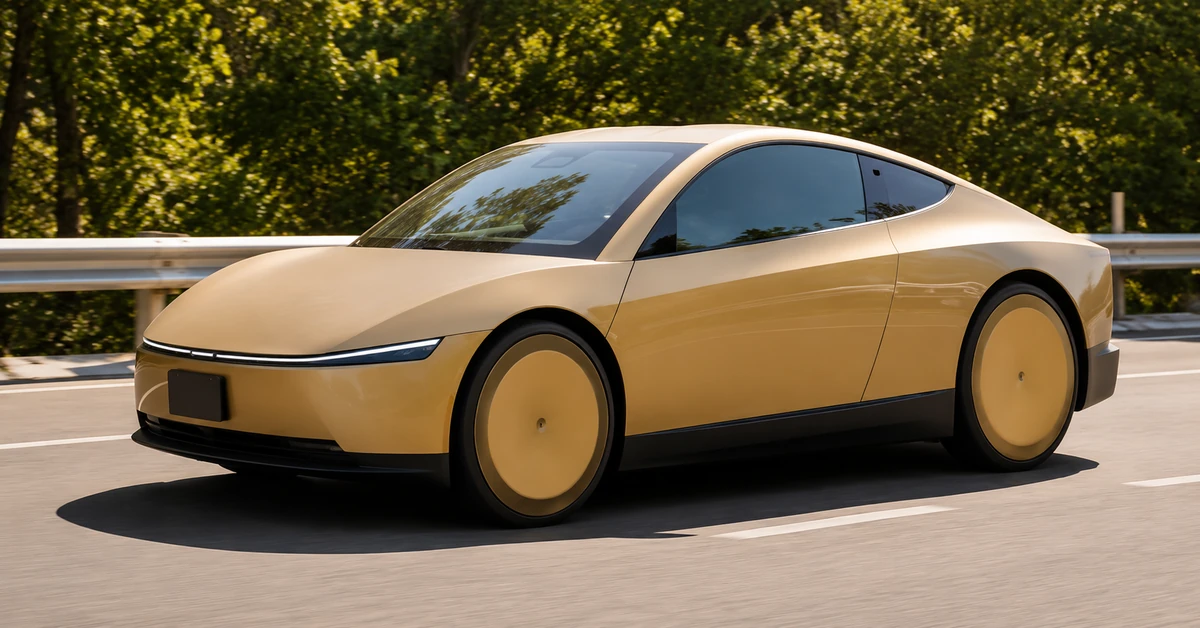
Tesla promised a robotaxi for under $30,000 back in October 2024. Two years later, the company has an order page, a price tag and a delivery estimate. The Tesla Cybercab release date is no longer a promise on social media. It sits on a checkout screen that a small group of buyers saw on Friday, November 13, 2026.
That screen holds more than a date. It shows a price that hits Tesla’s old target, a monthly fee few people saw coming and limits on where the car can go. Here is what the order page says, what could change the timing and who can actually buy one.
Tesla Cybercab Release Date: What Tesla Announced on November 13

Tesla’s Robotaxi account on X announced that select customers are now being invited to buy a Cybercab for personal use. The post included the customer email and screenshots of the order page.
The order page lists an estimated delivery of December 2026 in Austin, Texas. That makes December the current Tesla Cybercab release date for the first personal buyers.
The word “estimated” matters here. Tesla has not named a delivery day. According to The Electric Viking, the company has also not announced sales to the general public.
The invitation email describes a limited first release. The car works only in supported service areas.
Tesla also revealed the price. At $29,990, the two-seat Cybercab undercuts the Model 3 by $7,000 and becomes the cheapest Tesla ever, InsideEVs reported. The figure also meets the sub-$30,000 target Musk set when he unveiled the car in October 2024.
Read more: Flying Tesla Car: From a 1917 Dream to the 2026 Roadster Demo
What December Really Means for the Tesla Cybercab Release Date

A release for the Cybercab does not look like a normal car launch. There are no showrooms stocked with cars and no open order button. Three limits shape the date.
Ordering is by invitation. Only select customers can order right now.
Delivery is planned for Austin. Drive Tesla Canada said the car is only available in that city today, so it presumes the first buyers live there.
The date is also an estimate, and Tesla has missed autonomy targets before. Musk once told investors that driverless ride-hailing would cover half the US population by the end of that year. Interesting Engineering reported that it did not happen.
The Cybercab program has hit some marks, though. Musk set production for the second quarter of 2026, and Tesla confirmed production at Giga Texas on April 23.
Tesla’s own team has held steady on the end-of-year goal. Lars Moravy, Tesla’s vice president of vehicle engineering, said on the Q3 earnings call that Tesla wanted Cybercabs with customers before 2026 ends. Musk confirmed the same goal in early September, according to BASENOR.
Not every reader of the October call saw it that way. A CleanTechnica write-up read customer availability as closer to 2027. The order page now points to December, which is sooner.
BASENOR’s analysis expects the first delivery to be a symbolic milestone rather than the start of open sales. That fits the invitation-only approach.
Cybercab Price, Deposit and the $299 Monthly Fee

Not a Tesla App reported the terms shown on the order page. Here is how they read.
| Item | Terms |
|---|---|
| Vehicle price | $29,990 before tax |
| Order deposit | $1,000, non-refundable |
| Autonomy Subscription | $299 per month |
| Included in purchase | First month of the subscription |
| Estimated delivery | December 2026, Austin, Texas |
The subscription is not optional. Tesla’s Autonomy Subscription Agreement says the Cybercab will not operate without an active paid plan. The agreement also limits the car to personal, non-commercial use.
TeslaNorth pointed out that the $299 figure sits on the order screen and not inside the agreement itself. Buyers should read both documents before they pay the deposit.
The fee is far higher than the $99 monthly Full Self-Driving subscription that current Tesla owners pay, Drive Tesla Canada noted. It may also hint at what Tesla will charge for Unsupervised FSD later.
Simple math shows the real cost. A year of fees comes to $3,588. The first month is free, so year one costs $29,990 plus 11 paid months, or $33,279 before tax. After three years, the total passes $40,000.
Those totals are our own arithmetic. Taxes and the routine maintenance that the terms require come on top.
Chargenews raised the other side of that bet. The open question is whether the monthly fee brings in enough recurring revenue to cover the thin margin on a $29,990 car.
Read more: iPhone Duo: Apple’s First Foldable iPhone Specs, Price and Release Date
Cybercab vs Model 3: Three-Year Cost

The Model 3 gives a useful yardstick. InsideEVs said the Cybercab undercuts it by $7,000, which puts the Model 3 near $36,990 before tax.
Add the $99 monthly FSD subscription for 36 months and a Model 3 comes to about $40,554. The Cybercab comes to about $40,455 over the same period. The gap is under $100.
These figures are our own arithmetic and leave out taxes, insurance and upkeep. They also compare two different products. A Model 3 owner drives, while a Cybercab owner rides in a car with no controls, inside a zone Tesla sets.
The comparison shows why the subscription matters more than the sticker price. The cheap headline number hides a monthly bill that erases most of the savings.
Where the Tesla Cybercab Can Drive

Tesla says the car will run only in supported service areas. Not a Tesla App reads that as the same zone Tesla’s own Cybercabs use in Austin. An owner who lives and works outside that zone would get little use from the car.
Cybercab rides began in Austin on September 3, 2026, according to Motor1. On the October 21 earnings call, Musk said the Austin fleet had grown tenfold in about a month.
Tesla also plans to launch Cybercab service in Dallas in November, Fox Business reported. Tech Insider noted that Tesla has not given a launch day, a fleet size or an operating area for Dallas.
For personal buyers, the zone matters as much as the date, because Tesla limits where the car can operate.
Why Tesla Is Pushing the Cybercab Now
The timing lines up with a strong quarter. Tesla reported $28.05 billion in third-quarter revenue, according to Fox Business. Musk said demand for Tesla vehicles is running ahead of production.
Software is a big part of that story. Over 75 percent of North American deliveries in Q3 included a paid FSD subscription sign-up, according to Not a Tesla App’s call recap. Tesla also ended the quarter with more than $45 billion in cash and investments.
The company raised its 2026 spending plan to about $20 billion. Cybercab production, the Optimus robot and Tesla’s planned chip factory all draw on that money.
A cheap car with a monthly software fee fits that pattern. Startup Fortune noted that a company selling cars plus a $299 monthly feed looks more like a software business, and that investors will price the two stories differently.
Read more: iPhone 18 Pro and Pro Max Launched: Price, Features, Camera and Everything You Need to Know
Cybercab Timeline: From the 2024 Reveal to the Order Page
The road to the December estimate took more than two years.
- October 2024: Musk unveils the Cybercab and sets a target price below $30,000.
- February 17, 2026: The first production Cybercab leaves the Giga Texas line.
- April 23, 2026: Tesla says the Cybercab is in production at Giga Texas.
- May 29, 2026: An EPA filing lists this as the date Tesla introduced the car into commerce.
- September 3, 2026: Cybercab rides begin in Austin.
- October 21, 2026: Tesla’s Q3 call confirms fast fleet growth and a Dallas plan.
- November 13, 2026: Tesla invites select customers to order.
Cybercab Specs: Battery, Range and Charging

The Cybercab is a two-seat car with no steering wheel, no pedals and no mirrors. Tesla built it around its AI4 computer.
EPA filings show a 47.6 kWh battery and a single 163 kW motor, which equals 219 horsepower, driving the front wheels. The unadjusted combined range is 418.2 miles. The adjusted EPA range is estimated at about 292 to 293 miles.
Curb weight is 3,113 pounds, according to the same filings as reported by Electrek.
The car has no plug port. It charges wirelessly through an inductive pad, and Tesla is targeting efficiency above 90 percent. Tesla has not detailed how widely those pads will be available.
Tesla claims the car is easier to build because it uses 50 percent fewer parts, according to CleanTechnica’s summary of the Q3 call. Tech Insider reported that the Cybercab line has a listed capacity above 125,000 vehicles a year.
The Federal Audit That Could Test the Tesla Cybercab Release Date

The biggest outside risk comes from federal safety regulators. TechCrunch reported that NHTSA opened an investigation into how the Cybercab reached public roads with no steering wheel or pedals. NHTSA said Tesla told the agency it self-certified the car as meeting all federal safety standards.
The agency’s audit query covers about 1,000 Cybercabs in Austin. NHTSA wants to know how Tesla showed the car meets rules written for cars with human drivers.
The issue is not a crash or a reported defect, Drive Tesla Canada noted. An audit also does not mean Tesla did anything wrong.
Amazon’s Zoox took another route. NHTSA gave Zoox a temporary exemption in July 2026 that lets it deploy up to 2,500 robotaxis a year for two years. Reports on the Cybercab case say Tesla has not requested such an exemption.
Motor1 said the audit could slow Cybercab expansion while regulators decide whether self-certification covers a car with no steering wheel. For buyers waiting on a December handover, that is the main unknown outside Tesla’s control.
Who the Cybercab Is Really Built For
Tesla treats the Cybercab as a ride service first. CleanTechnica noted that Musk stressed transport-as-a-service on the October call, not a car most people will own. Tech Insider read that framing to mean most Cybercabs will stay in Tesla’s own fleet.
Tesla has also looked for fleet buyers. Electrek reported that on September 3, Tesla opened a search for Cybercab fleet buyers and left owners of FSD cars out.
Personal buyers are a small first group. The mandatory $299 fee and the non-commercial rule suggest Tesla wants tight control over how these cars are used.
Customer-owned cars with Unsupervised FSD are a separate track. Tesla’s VP of AI said the software could reach the first customer vehicles in the second quarter of 2027, and that those cars could join the Robotaxi network around then if they meet geofencing and fleet rules.
What to Watch Before December 31

Four things will decide whether December holds.
The first is the Dallas launch. Tesla said it would open Cybercab service there in November. A smooth start would show the fleet is growing beyond Austin.
The second is delivery notices. Buyers who ordered should watch for Tesla’s confirmation of a handover date in Austin. A slip into January would match the more cautious read of the Q3 call.
The third is the NHTSA audit. Any new ruling on how the Cybercab was certified could change how fast Tesla delivers.
The fourth is a bet. Tech reviewer Marques Brownlee promised to shave his head on camera if Tesla made the Cybercab available to customers for $30,000 before 2027, according to Drive Tesla Canada. The $29,990 price meets the cost condition. A real delivery before December 31 would settle the rest.
Read more: Mark Zuckerberg Net Worth 2026: How Much Is the Meta Founder Worth?
FAQ
When is the Tesla Cybercab release date?
Tesla’s order page shows an estimated delivery of December 2026 in Austin, Texas, for select customers it has invited to order. Tesla has not announced a specific delivery day or a date for sales to the general public.
How much does the Cybercab cost?
The price is $29,990 before tax. Buyers also pay a $1,000 non-refundable deposit and a required $299 monthly Autonomy Subscription. The first month of the subscription is included with the purchase.
Can anyone order a Cybercab right now?
No. Tesla is inviting select customers only, and the first deliveries are planned for Austin. The company has not said when it will open orders to everyone.
Does the Tesla Cybercab have a steering wheel?
No. The Cybercab is a two-seat car with no steering wheel, no pedals and no mirrors. It relies on Tesla’s AI4 computer to drive itself.
Can I use my Cybercab as a taxi to earn money?
Not under the current terms. Tesla’s Autonomy Subscription Agreement limits the car to personal, non-commercial use. Tesla has separately looked for fleet buyers, but that program is not part of the personal-use order page.