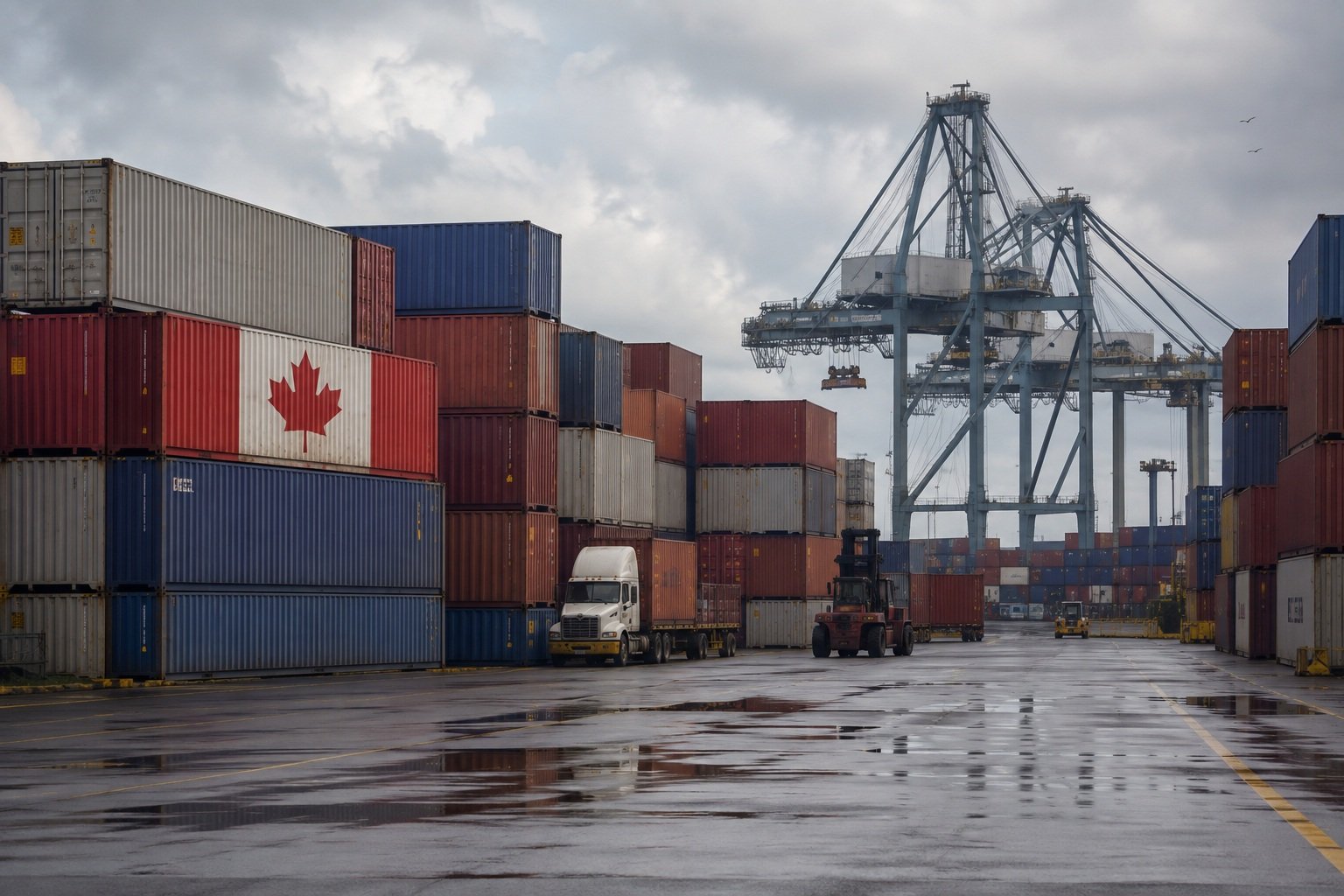
Canada’s prime minister has put a warning on the table for Washington. Mark Carney says Canada could turn to Chinese automakers if trade talks with the United States fail to protect its car industry. He made the comments in Phnom Penh, Cambodia, on Monday, November 16, 2026. A meeting with Chinese President Xi Jinping is planned for this week. For the roughly 125,000 Canadians who work directly in autos, the next few days matter.
Key Points
- Carney said Canada could look to Chinese, European or Japanese carmakers if US trade talks fail.
- He said any Chinese investment must include real manufacturing in Canada, not just assembly of imported parts.
- Carney is expected to meet Xi in Shenzhen this week, where Chinese auto production is likely to come up.
- Canada and the US are making progress toward a deal, Carney said, but differences remain.
Read more: Trump Xi Putin Summit Set for Shenzhen Next Week
What Carney Said About Chinese Automakers

Carney spoke to reporters at the Francophonie Summit in Phnom Penh. He said talks with the United States remain his first priority. The outcome, he added, could decide whether Canada looks to European, Chinese or Japanese carmakers instead, the Associated Press reported.
He argued that the North American car market has become less connected because of US trade actions. Canada wants its autoworkers fully used inside that shared market. If that does not happen, other options open up.
Asked if the Chinese option was a bargaining chip, Carney said no. He described it as a reaction to US moves. “Canada is going to move forward either way,” Carney said.
On Saturday in Manila, he had said any deal with Washington must leave Canada with a working auto industry. He said he had spoken at length with President Donald Trump and senior US officials. Both sides are making progress, he said, though gaps remain.
So why is Canada so worried about its car plants? The answer starts with how a vehicle gets built.
Why Canada’s Auto Industry Is Under Pressure

A single vehicle in North America often crosses borders several times before it is finished. Parts leave one country, enter another, and come back. Ford, General Motors and Stellantis run factories in Canada, the United States and Mexico, according to AP.
Trump’s tariffs have disrupted that system. He has also pushed automakers again and again to move production from Canada to the United States.
The stakes are large. Autos are Canada’s second-largest export, AP reported. Carney has said the sector employs 125,000 people directly and almost 500,000 more in related industries. If your job depends on a parts plant in Ontario, this fight is about your paycheck.
One company has already made that risk real.
Read more: Trump Tax Returns: Truth Social Post Accuses Democrats of “Get Trump” Effort
The Stellantis Fight Behind the Warning

Stellantis dropped plans to build the Jeep Compass at its Brampton, Ontario, plant. It moved the work to Illinois instead. More than 2,000 Canadian workers were left without jobs, AP reported. The company also agreed to sell the idle Brampton plant to Roshel, a Canadian maker of armored vehicles.
Ottawa pushed back hard. Industry Minister Mélanie Joly said the government sent a notice of default and gave Stellantis 30 days to fix the breaches or face a lawsuit. In 2022, Canada committed up to C$529 million (about US$380 million) to help retool the Brampton and Windsor plants for electric vehicles, AP reported. Carney accused the company of betraying Canadian workers.
Brampton shows what can happen when a production shift to the US goes unanswered. That helps explain why Chinese investment is now on the table. Carney, however, set strict terms.
What Chinese Investment Would Need to Look Like

Carney said any Chinese investment must involve real manufacturing in Canada. Putting together imported parts would not be enough. He rejected the idea of simple kit-car assembly.
He listed what he wants to see. Proper labor standards, factories on Canadian soil, and local supply chains that grow over time. He also pointed to Canadian critical minerals used in electric vehicles.
That is a high bar. Chinese brands would need to build in Canada, not just ship vehicles in.
Canada has also already opened one door to Chinese cars.
Read more: Trump Says Gulf States Back Iran Blockade After Qatar Talks
The January Deal on Chinese Electric Vehicles

Carney and Xi reached an agreement in January that lets tens of thousands of Chinese electric vehicles into Canada at lower tariffs, according to AP. Canada cut its 100% tariff on those vehicles to 6.1%. The deal first allows up to 49,000 vehicles a year, and the cap rises over time. In return, China lowered tariffs on Canadian farm goods, including canola.
Carney said at the time that he expected the deal to bring Chinese investment and jobs.
Ontario Premier Doug Ford, whose province is the center of Canada’s auto industry, criticized the agreement. He warned that Chinese electric vehicles could threaten Canadian jobs and put access to the US market at risk.
Both views will face a test this week.
What Happens Next at APEC in Shenzhen
Carney is set to meet Xi in Shenzhen, where Chinese auto manufacturing is expected to be discussed, AP reported. The Asia-Pacific Economic Cooperation summit there runs from November 18 to 19, Global News reported. Trump will also attend. Carney said he expects to speak with Trump at APEC or at the ASEAN summit in the Philippines, which runs from November 16 to 18.
Carney also said he will raise foreign interference concerns with Xi.
Two things remain unclear. No US and Canada trade deal exists yet. And AP’s report names no Chinese company or plant. Those two facts will decide what comes next for Canadian car workers.
FAQ
What did Carney say about Chinese automakers?
Carney said Canada could turn to Chinese automakers if trade talks with the US fail to protect an integrated North American auto industry. He said talks with Washington remain his priority.
Why is Canada considering Chinese automakers?
Trump’s tariffs have disrupted Canada’s cross-border auto industry, and he has pushed carmakers to move production to the US. Carney says that pressure leaves Canada with other options if talks fail.
What conditions would Chinese investment face?
Carney said it must involve substantial manufacturing in Canada, not just assembling imported parts. It would also need labor standards, local factories and supply chains that expand, including Canadian critical minerals.
When will Carney meet Xi Jinping?
AP reported a meeting is planned this week in Shenzhen, China. The APEC summit there runs from November 18 to 19, according to Global News.
How many Chinese electric vehicles can enter Canada?
Under the January agreement, Canada cut its tariff on Chinese electric vehicles from 100% to 6.1%. It first allows up to 49,000 vehicles a year, with the cap rising over time.