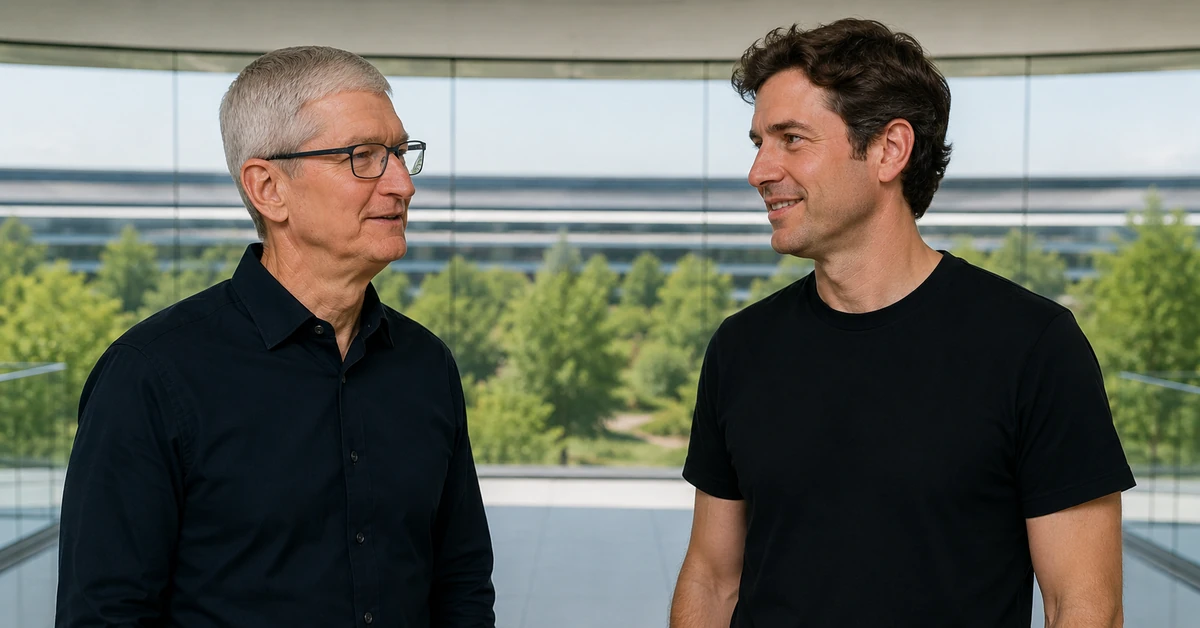
Tim Cook has closed the book on his 15 years as Apple CEO. His last official day in charge ended on August 31, 2026, and John Ternus, Apple’s longtime hardware chief, steps in as CEO on September 1, becoming only the eighth person to lead the company in almost 50 years.
Apple confirmed the succession plan back in April 2026, naming Ternus, then senior vice president of Hardware Engineering, as Cook’s replacement.
Cook is not walking away from Apple. He moves into the newly expanded role of executive chairman of the company’s board, a post that keeps him close to the business while handing daily control to Ternus.
A Farewell Memo That Read Like a Goodbye Letter
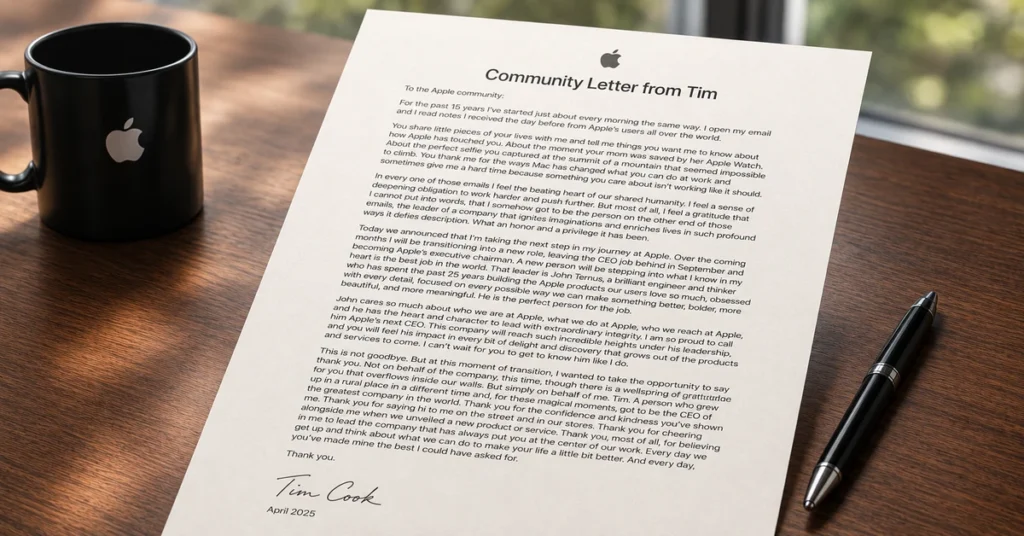
Cook marked his final morning in charge with a personal memo to Apple employees, later obtained and published by 9to5Mac. He looked back on his years running the company and thanked staff for building it alongside him.
Whatever success he achieved, Cook wrote, belonged to the people around him. He called his team the most extraordinary group he had ever worked with, and admitted that stepping away from a job he loved would leave a gap he could only begin to describe.
He reserved his warmest words for Ternus. Cook said handing over the company to someone as capable as Ternus gave him enormous comfort, and added that few people understand what it takes to build products that change the world the way Ternus does.
The send-off had already started days earlier. Apple hosted a farewell dinner for Cook at Apple Park, complete with hours of tributes from Ternus, Laurene Powell Jobs, and a mix of current and former executives.
OneRepublic, one of Cook’s favorite bands, performed at the event. Earlier in August, Cook even used a visit from Nintendo’s Pokémon team to introduce them to Ternus, a small but telling sign that the handoff was already underway.
From Steve Jobs’ Operations Chief to Apple’s Longest-Serving Boss
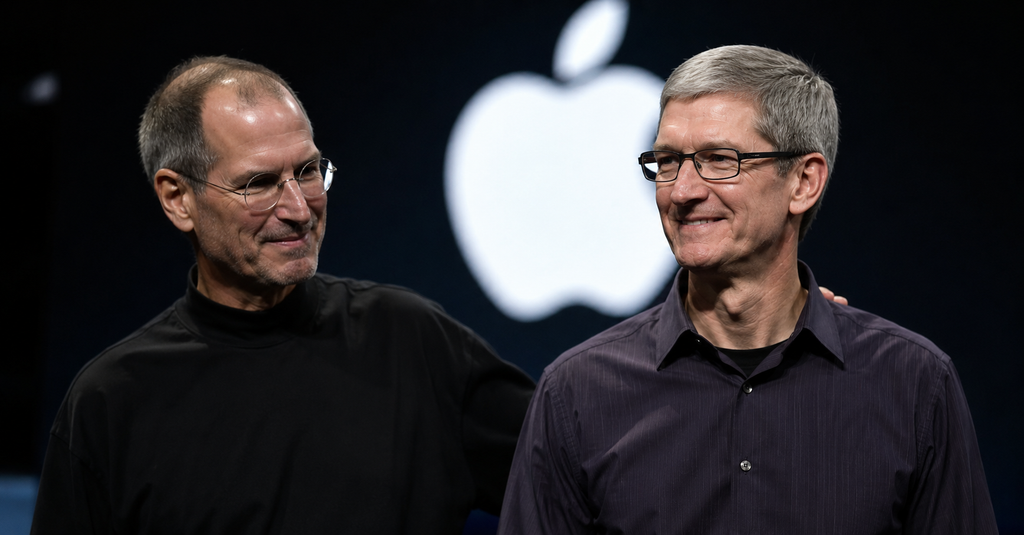
Cook’s path to the top started long before 2011. Steve Jobs recruited him from Compaq in 1998 to fix Apple’s struggling supply chain, and Cook spent years as senior vice president of worldwide operations before becoming chief operating officer in 2005.
When Jobs stepped down as CEO on August 24, 2011, citing his health, the board turned to Cook. Jobs died two months later, leaving Cook to run Apple for the first time without its co-founder watching over his shoulder.
What came next looked nothing like the Jobs era. Instead of the dramatic product reveals that defined Apple’s comeback in the 2000s, Cook built a company known for operational discipline, steady iteration, and a rapidly growing services business. Critics spent years arguing Apple had lost its edge for breakthrough invention. Investors, for the most part, disagreed with their wallets.
Apple’s Stock Under Cook: A 2,000 Percent Climb
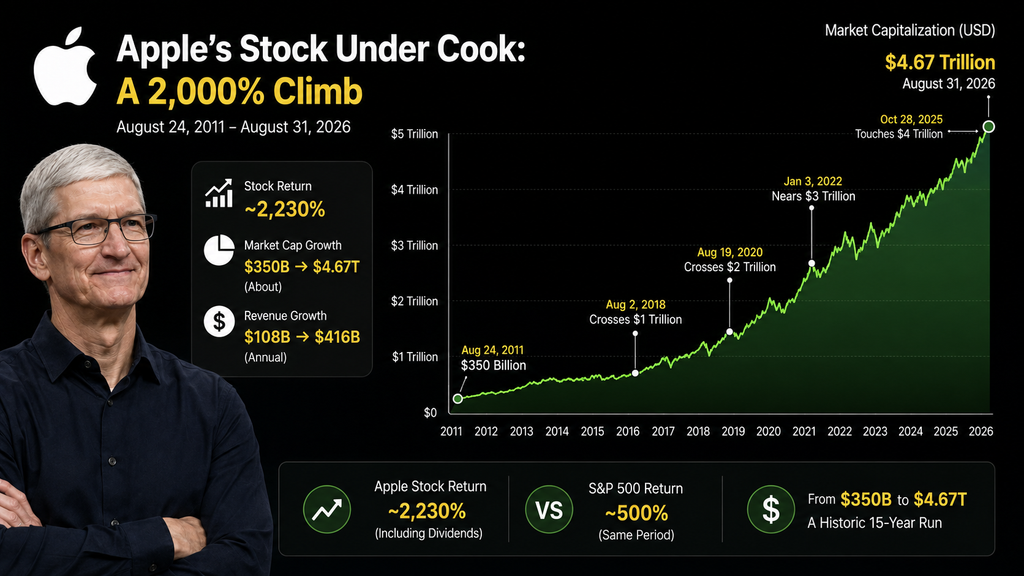
Numbers tell the clearest story of Cook’s tenure. When he took over in August 2011, Apple carried a market capitalization of about $350 billion and annual revenue of $108 billion. By the time he handed off the role, Apple’s market value had grown to roughly $4.67 trillion, with fiscal 2025 revenue reaching $416 billion.
The stock climbed right alongside it. Apple shares returned close to 2,230 percent during Cook’s run, meaning a $10,000 investment made on his first day as CEO would have grown to around $233,000 today, dividends included. That performance dwarfs the S&P 500, which gained just over 500 percent across the same period.
Apple crossed its first $1 trillion valuation in August 2018, doubled to $2 trillion two years later, neared $3 trillion in early 2022, and briefly touched $4 trillion in October 2025, a run that made it the first company in history to reach that mark.
Product growth backed up the stock gains. Apple launched the Apple Watch and AirPods under Cook and turned them into the best-selling smartwatch and headphones in the world.
iPhone revenue alone grew from $47.1 billion to $209.6 billion over his tenure. Services, barely a footnote when Cook took charge, now generates more than $100 billion a year and stands as Apple’s second-largest business behind the iPhone.
Tim Cook’s Personal Fortune: Big Company, Modest Paycheck
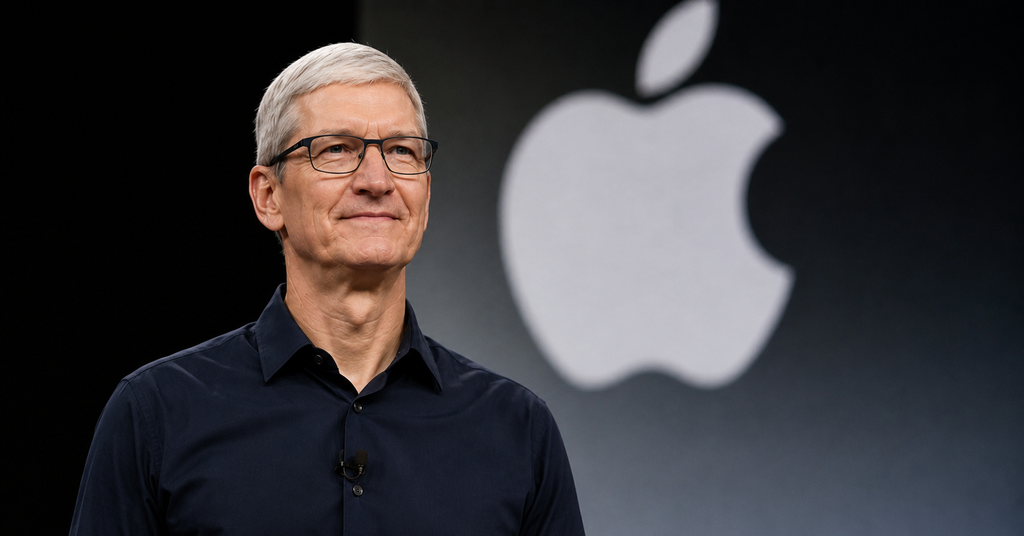
Despite running one of the most valuable companies on Earth, Cook never paid himself like a typical corporate chief. His base salary has sat at $3 million a year since 2016, a small slice of his total compensation, which reached $74.3 million in 2025 once stock awards and bonuses were included. Most of his wealth, estimated at around $2.9 billion, came from performance-based stock grants tied to Apple’s growth rather than founder-level equity.
Cook currently holds close to 3.3 million Apple shares, a stake worth roughly $886 million at recent prices, though he has sold more than $1 billion worth of stock over the years to diversify his holdings and cover taxes.
In a 2015 interview, Cook said he planned to give away his entire fortune to charity after covering his nephew’s college tuition, and insider filings show he has followed through with steady share gifts over the past decade.
Who Is John Ternus, and Why Apple Chose Him
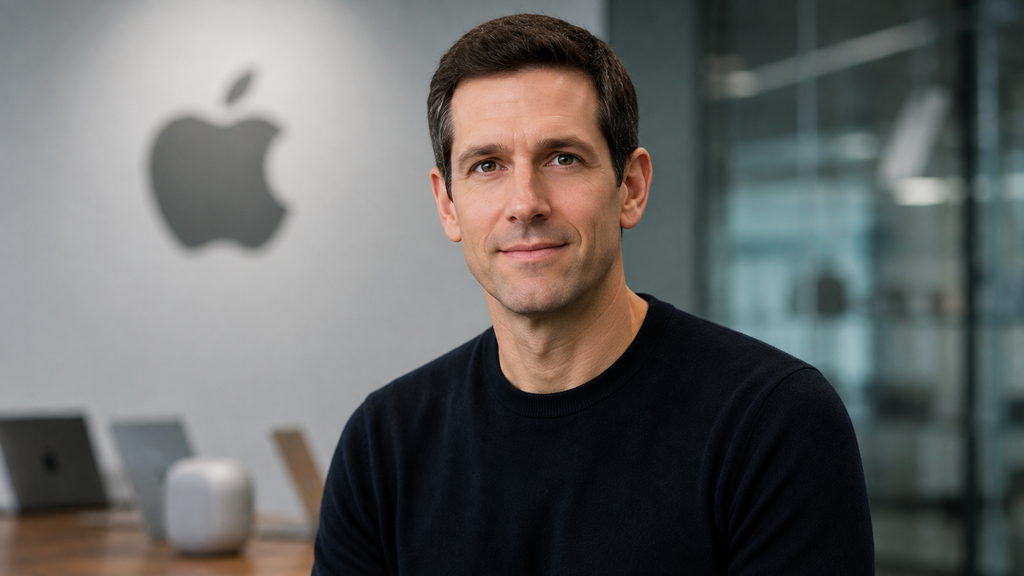
Ternus, 50, joined Apple in 2001 as a mechanical engineer on the product design team, working first on the Apple Cinema Display. He built his reputation quietly over the next two decades. In 2013, he became vice president of Hardware Engineering under Dan Riccio, taking charge of the Mac and iPad lines and later AirPods.
By 2020, Apple had handed him iPhone hardware too, and in 2021 he was promoted to senior vice president of Hardware Engineering, replacing Riccio outright.
Today, Ternus oversees hardware engineering for the entire Apple lineup, including iPhone, iPad, Mac, Apple Watch, AirPods, and Apple Vision Pro.
He played a central role in shifting the Mac to Apple’s own silicon chips, widely seen as one of the smoothest hardware transitions in the company’s history. A varsity swimmer at the University of Pennsylvania, Ternus graduated with a mechanical engineering degree in 1997 and designed a mechanical feeding arm for people with quadriplegia as his senior project, before joining Apple after a stint at a virtual reality company.
He is expected to move into Cook’s old office once the transition finishes, and Cook’s longtime executive assistant will stay on to support him.
What John Ternus Faces First
Ternus takes charge during one of Apple’s more demanding stretches in years. The company is racing to close the gap with Microsoft and Google on artificial intelligence, especially around its delayed Siri overhaul. Memory chip shortages and rising component costs add further pressure as he settles into the role.
His first real test arrives fast. Ternus will lead his debut product event as CEO on September 9, internally named “Surprise and Shine,” where Apple is expected to unveil a foldable iPhone Ultra, new iPhone 18 Pro models, and updated Apple Watch hardware. Cook will not appear on stage. Apple has also flagged additional launches on the horizon, including rumored smart glasses and other AI-focused devices meant to compete with hardware plans from OpenAI.
Cook Isn’t Fully Stepping Away
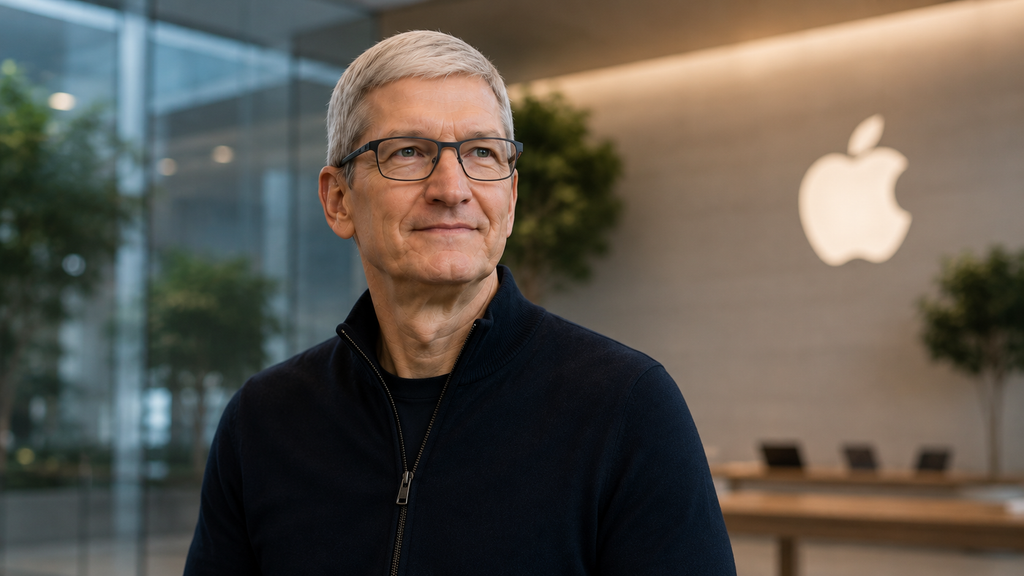
Cook’s new title comes with real responsibilities. As executive chairman, he plans to keep managing Apple’s relationships with President Donald Trump and the Chinese government, two relationships that have shaped Apple’s manufacturing and trade strategy for years. Apple has said Cook will also continue assisting with other parts of the business, including broader engagement with policymakers around the world.
Cook has told staff he remains healthy, energetic, and firmly committed to Apple, saying he cannot imagine his priorities working any other way. He plans to spend more time outdoors and at his vacation home in Palm Springs, but has made clear the company will stay close to the center of his life.
FAQ
When did Tim Cook officially stop being Apple’s CEO?
Cook’s last day as CEO was August 31, 2026. John Ternus formally became CEO the following day, September 1, 2026.
Is Tim Cook leaving Apple completely?
No. Cook is moving into the role of executive chairman of Apple’s board of directors, where he will keep handling relationships with the U.S. and Chinese governments and support Ternus on other company matters.
How much did Apple stock grow under Tim Cook?
Apple shares returned close to 2,230 percent during Cook’s 15 years as CEO, compared with a roughly 500 percent gain for the S&P 500 over the same stretch. Apple’s market value grew from about $350 billion in 2011 to nearly $4.67 trillion by 2026.
Who is John Ternus, Apple’s new CEO?
Ternus is a 25-year Apple veteran who joined in 2001 as a mechanical engineer. He rose to senior vice president of Hardware Engineering in 2021, overseeing product development across iPhone, iPad, Mac, Apple Watch, AirPods, and Apple Vision Pro before becoming CEO.
What challenges will John Ternus face as CEO?
Ternus takes over as Apple works to catch up on artificial intelligence, particularly with its delayed Siri upgrade. He also faces memory chip shortages, rising component costs, and a major product event on September 9 as his first big test.
What is Tim Cook’s net worth after stepping down as CEO?
Cook’s net worth is estimated at around $2.9 billion, built mostly through stock-based compensation rather than founder equity. His base salary stayed at $3 million a year for most of his tenure, with the rest of his pay tied to Apple’s stock performance.