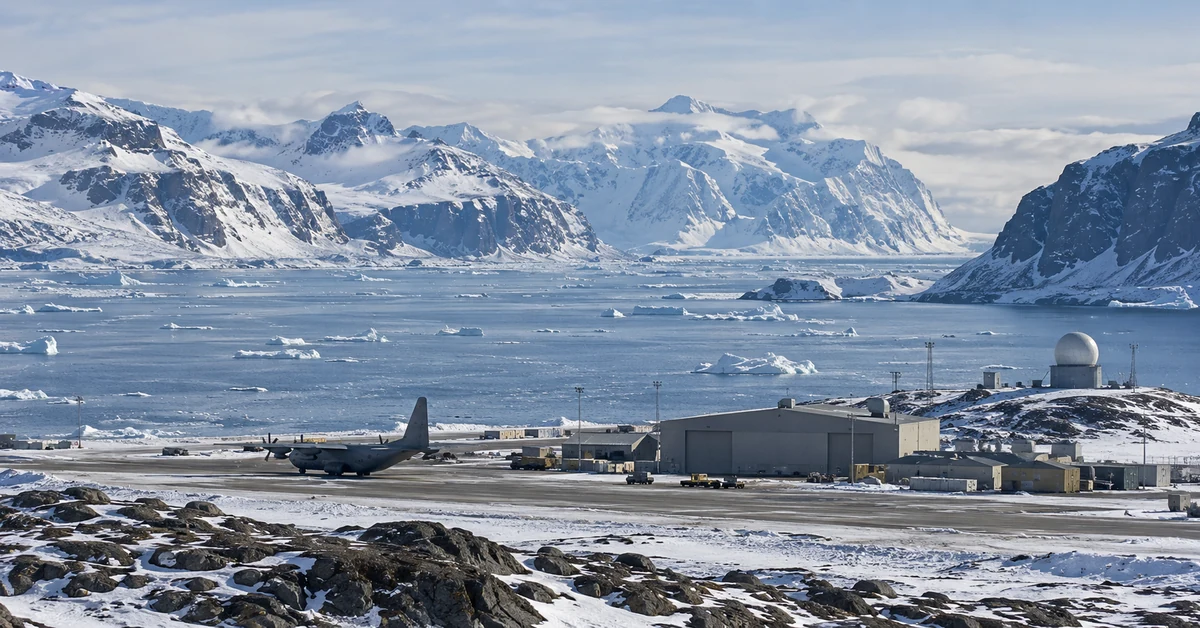
The United States is set to open two new military bases in Greenland. The move comes under a fresh security agreement with Denmark and Greenland. Officials expect the three governments to sign the deal at the United Nations General Assembly in New York this week.
The Greenland military bases plan marks one of the biggest shifts in US Arctic strategy in decades. It follows months of tension between Washington and Copenhagen over the future of the island.
Where the New Bases Will Be Located
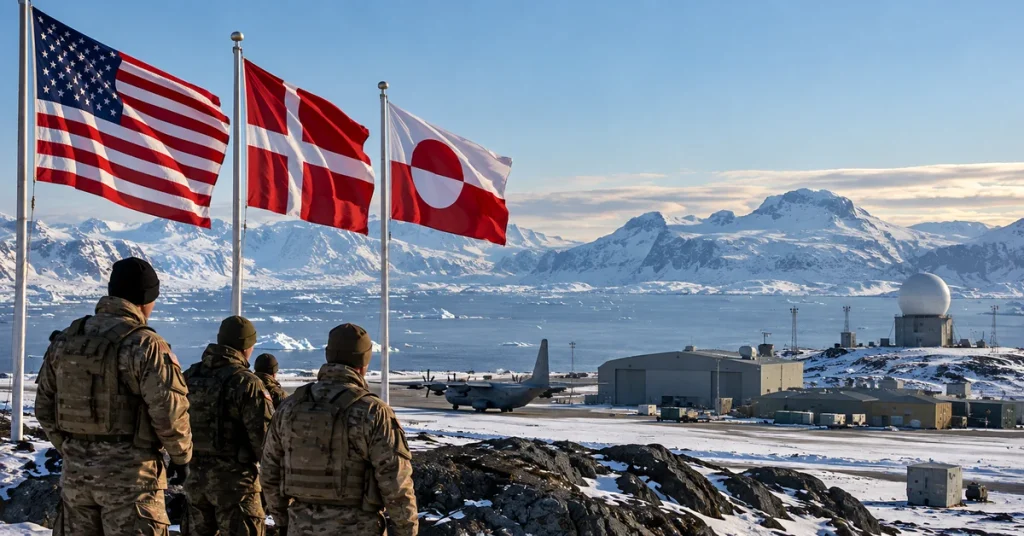
According to people familiar with the matter, the two planned sites are Narsarsuaq and Mestersvig. Narsarsuaq sits in southern Greenland. The US ran a base there called Bluie West One during World War Two. Washington shut it down in the 1950s. Today, only a few dozen people live in the town.
Mestersvig lies on Greenland’s remote east coast. Denmark currently uses the site to support its Sirius Dog Sled Patrol, a special forces unit that patrols the island’s vast northeastern region.
Three sources told Reuters that the new deal would let the US return to Narsarsuaq after more than 70 years. Two sources confirmed Mestersvig is also part of the agreement.
Read more: Trump AI Force: President Announces New Group and Plans to Name a Czar
Signing Set for Tuesday
The three governments plan to sign the agreement at 10:30 a.m. Eastern Time on Tuesday. The full text of the deal has not been made public yet. People close to the talks say some details may stay unresolved right up to the signing.
Denmark and Greenland’s governments did not respond to requests for comment. A White House spokesperson also declined to share details. The spokesperson pointed instead to an earlier statement, which said the agreement would help “secure and defend the security of Greenland and the United States.”
Months of Pressure Over Greenland’s Future
This agreement follows a period of open tension between the US and its NATO ally Denmark. President Donald Trump has repeatedly said the United States should control Greenland. He has not ruled out using economic or military pressure to make that happen.
Greenland remains part of the Kingdom of Denmark. It runs its own affairs under a system of extensive self-government. Polling cited by Reuters shows Greenlanders have overwhelmingly rejected Trump’s calls for US control.
Trump’s comments caused a diplomatic crisis inside NATO earlier this year. That pressure pushed Denmark and Greenland to open talks with Washington. Both sides wanted to ease tensions while still addressing US concerns about Arctic security.
Denmark has framed the new deal as part of a wider NATO approach to the region. Under this framing, Arctic security would sit within NATO’s structure. It would not rest solely on Washington and Copenhagen. This shift could change how Denmark and its allies handle Greenland’s defense going forward, even as the US expands its own footprint on the island.
Why Greenland Matters for Military Strategy
Greenland sits between North America and Europe. That position has given it military importance for decades. It also plays a key role in monitoring activity across the North Atlantic and the wider Arctic region.
US Military Presence During the Cold War
During the Cold War, the US kept a large military presence in Greenland. Reuters reports that Washington ran 17 installations on the island at the time. More than 10,000 US personnel were stationed there.
That footprint shrank sharply after the Cold War ended. Today, the US operates just one facility in Greenland: Pituffik Space Base, previously called Thule Air Base. Around 150 US personnel work there now.
The new Greenland military bases would add to this limited presence. They would give the US more reach across the island while working alongside Danish and NATO forces already active in the region.
Read more: Michael J Fox Age Revealed: The Story Behind His Emotional Emmys Night
What the Deal Means for Each Side
What It Means for Denmark and Greenland
For Denmark and Greenland, the agreement offers a way to deepen security ties with Washington. At the same time, it keeps Greenland within the Danish realm and inside NATO’s defense structure.
Copenhagen gets a clearer framework for handling US involvement in Arctic security.
What It Means for the United States
For Washington, the deal expands its ability to operate in Greenland and track developments across the Arctic. Officials get this access without any change in who holds sovereignty over the island.
The US does not gain ownership or political control through this agreement.
That distinction matters given how sensitive the topic has become. Trump’s past statements about acquiring Greenland strained ties with Denmark. They also worried political leaders in Greenland, who saw the comments as a threat to the island’s autonomy.
The new agreement steers away from that debate. Officials describe it as focused on military cooperation and security arrangements, not on any shift in sovereignty. Even so, its final terms were still not public at the time Reuters reported on the deal.
A Return to Cold War-Era Sites
The choice of Narsarsuaq carries symbolic weight. The site once formed a key part of America’s wartime and Cold War military network in Greenland. Reopening it after 70 years would mark a real return to that era, though on a much smaller scale than before.
Mestersvig’s role looks different. The site has long supported Danish military and surveillance work through the Sirius Dog Sled Patrol. Adding a US presence there would tie American forces more closely to Denmark’s existing operations in the region.
Together, the two sites would give the US a foothold in both southern and eastern Greenland. That spread would let Washington keep watch over a wider stretch of Arctic territory than its current single base allows.
Read more: Trump Ireland Visit Ends With Golf and a United Ireland Remark
What Happens Next
If the three governments sign the deal as expected, it would count as a major expansion of US military access in Greenland. It would also mark a return to locations tied to Washington’s Cold War defense network.
The agreement would highlight how much weight the Arctic now carries for the United States, Denmark, and NATO as a whole. Melting ice, new shipping routes, and rising competition among major powers have all pushed the region higher up the strategic agenda in recent years.
For now, attention turns to Tuesday’s signing in New York. The final wording of the deal, and how each government explains it at home, will shape how this new chapter in US-Greenland relations plays out.