Canadian Prime Minister Mark Carney suspended trade talks with the United States late Friday. Last-minute negotiations failed to produce a deal. That cleared the way for new U.S. tariffs on Canadian goods.
The 50% tariffs took effect at midnight. They cover roughly C$28 billion worth of Canadian goods. This includes hockey sticks, honey, dairy products, and other exports. The move adds fresh strain to an already tense trade relationship.
Carney said Canada made real progress in the talks. But he said the final U.S. proposals did not meet Ottawa’s goals. He called the last-minute changes to the terms unfair and harmful. He also questioned whether any deal with the U.S. could be trusted to hold.
Carney said Canada will hit back. He promised matching tariffs to protect Canadian workers and businesses.
Talks Collapse at the Final Deadline

Canadian and U.S. negotiators spent weeks working toward a deal.
Canada wanted three things. It wanted tariff-free access to the U.S. market for most businesses. It wanted lower tariffs on key industries. And it wanted more certainty for workers and companies.
Carney said talks made good progress in recent weeks. But he said Washington’s final changes went too far.
In a statement Friday, Carney said he had decided to suspend the talks. He told Canada’s negotiating team to return to Ottawa. He said Canada would not accept a deal just to meet a deadline.
U.S. Trade Representative Jamieson Greer told a different story. He said Canada backed out of a tentative deal. He said Canada then made new demands that Washington could not accept.
Both sides blame the other. Neither country reached a deal before the deadline.
Carney Says Deeper Integration With the U.S. Is Over
Carney told Canadians the era of deeper economic integration with the United States has ended. He said America has changed. He said Canada will not accept a deal at any price.
U.S. Tariffs Hit Canadian Goods
The new U.S. tariffs place a 50% duty on a range of Canadian products. They affect close to C$28 billion in goods, according to Carney’s office. That covers only part of Canada’s total exports to the U.S.
Affected products include wooden hockey sticks, honey, dairy items, and cement. Some major exports got different treatment. This includes energy and certain critical minerals.
The tariffs mark a sharp escalation in the trade dispute. They could raise costs and add uncertainty for businesses on both sides of the border.
Canada Vows Dollar-for-Dollar Response
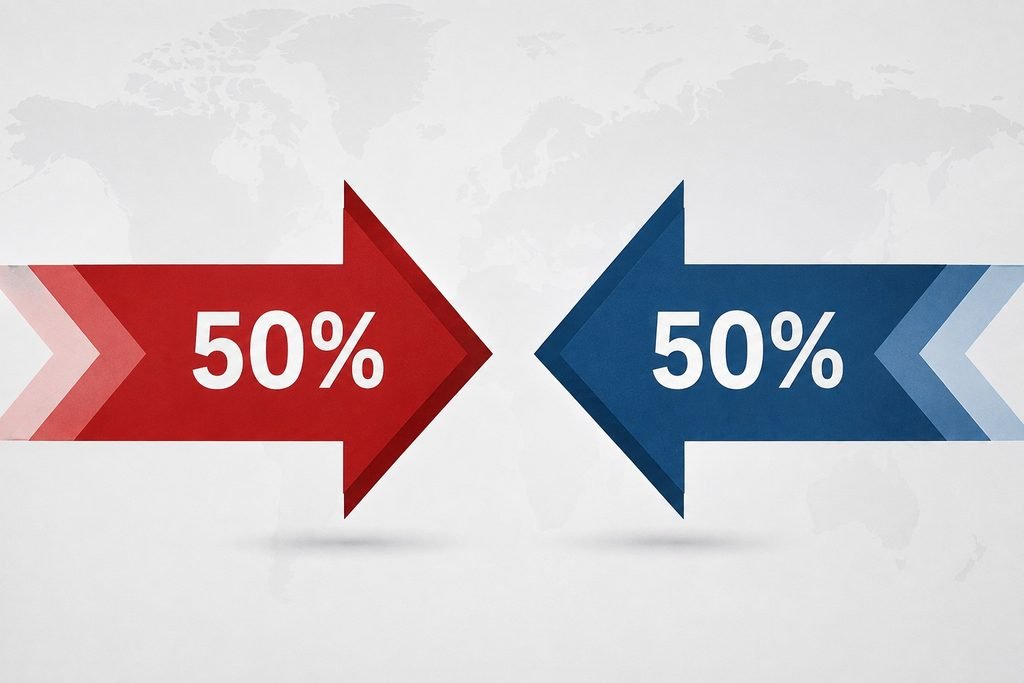
Carney said Canada will match the U.S. tariffs “dollar for dollar.” He said the goal is to protect Canadian workers and businesses.
Canada’s retaliatory tariffs start September 8. The response is expected to hit a wide range of U.S. imports. That includes steel, dairy, electronics, appliances, and farm equipment.
Canada also plans new support for workers and businesses hit by the tariffs.
Carney said Canada will share full details of the new tariff measures in the coming days. The measures are set to take effect the Tuesday after Labour Day.
The response could squeeze companies that depend on cross-border supply chains. It could also raise costs for consumers in both countries.
Canadian Leaders Back a Firm Response
Ontario Premier Doug Ford backed Carney’s move. He said Canada should be ready to hit back against the new U.S. tariffs.
Ford said he fully supports a dollar-for-dollar response.
The dispute has pushed more Canadian leaders to call for a stronger domestic economy. Many now want Canada to rely less on the U.S. market and trade more with other countries.
Carney’s government says cutting that dependence is already part of its economic plan.
Carney Points to Canada’s Economic Strength
Carney has tried to reassure Canadians that the country can handle the pressure.
In his Friday statement, he said Canada is creating jobs four times faster than the U.S. He also pointed to efforts to open new international markets and attract investment.
Carney said Canada already has preferential access to markets covering about 1.5 billion consumers. He said the government wants to expand that reach.
The government also announced more support for workers and businesses as the dispute continues.
What Happens Next
The focus now shifts to Canada’s retaliatory tariffs. Support for affected workers and businesses is next. So is the question of whether talks with Washington can restart.
For now, Canada’s negotiating team is back in Ottawa.
The collapse marks another setback for U.S.-Canada trade relations. The two countries remain closely linked economically. But this latest escalation adds real uncertainty for businesses on both sides.
The next phase depends on how long the tariffs stay in place. It also depends on whether Washington and Ottawa return to the table.